Sponsored by BrandGhost BrandGhost is a social media automation tool that helps content creators efficiently manage and schedule their social media... Visit now

Casetext versus Caseway AI

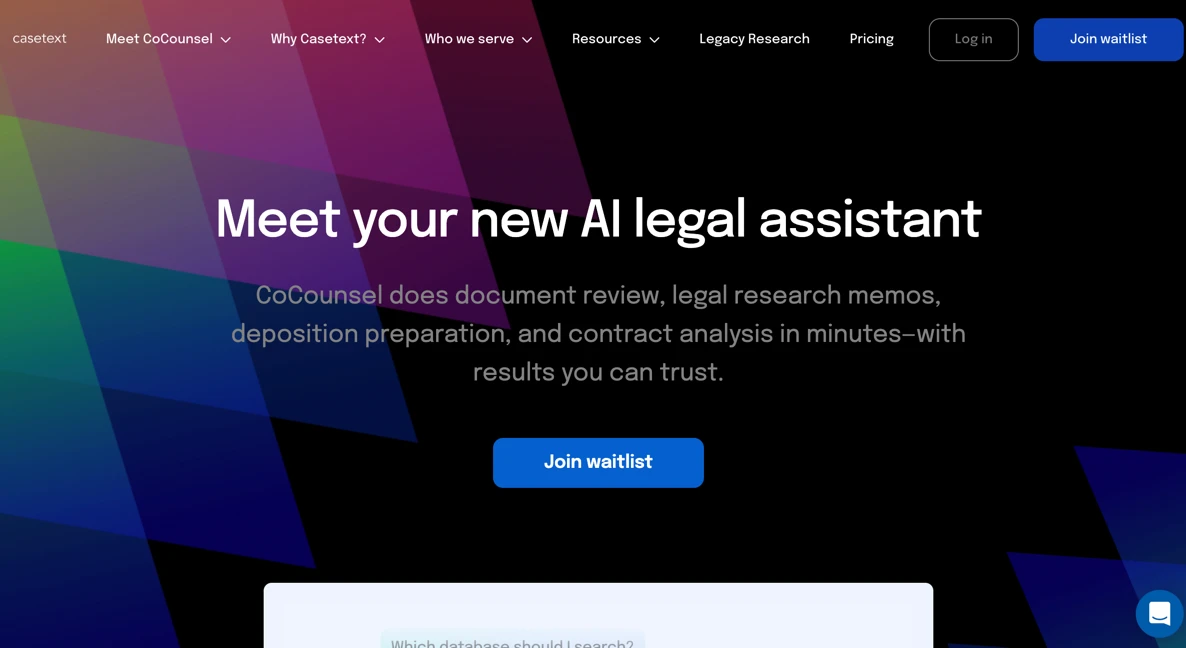
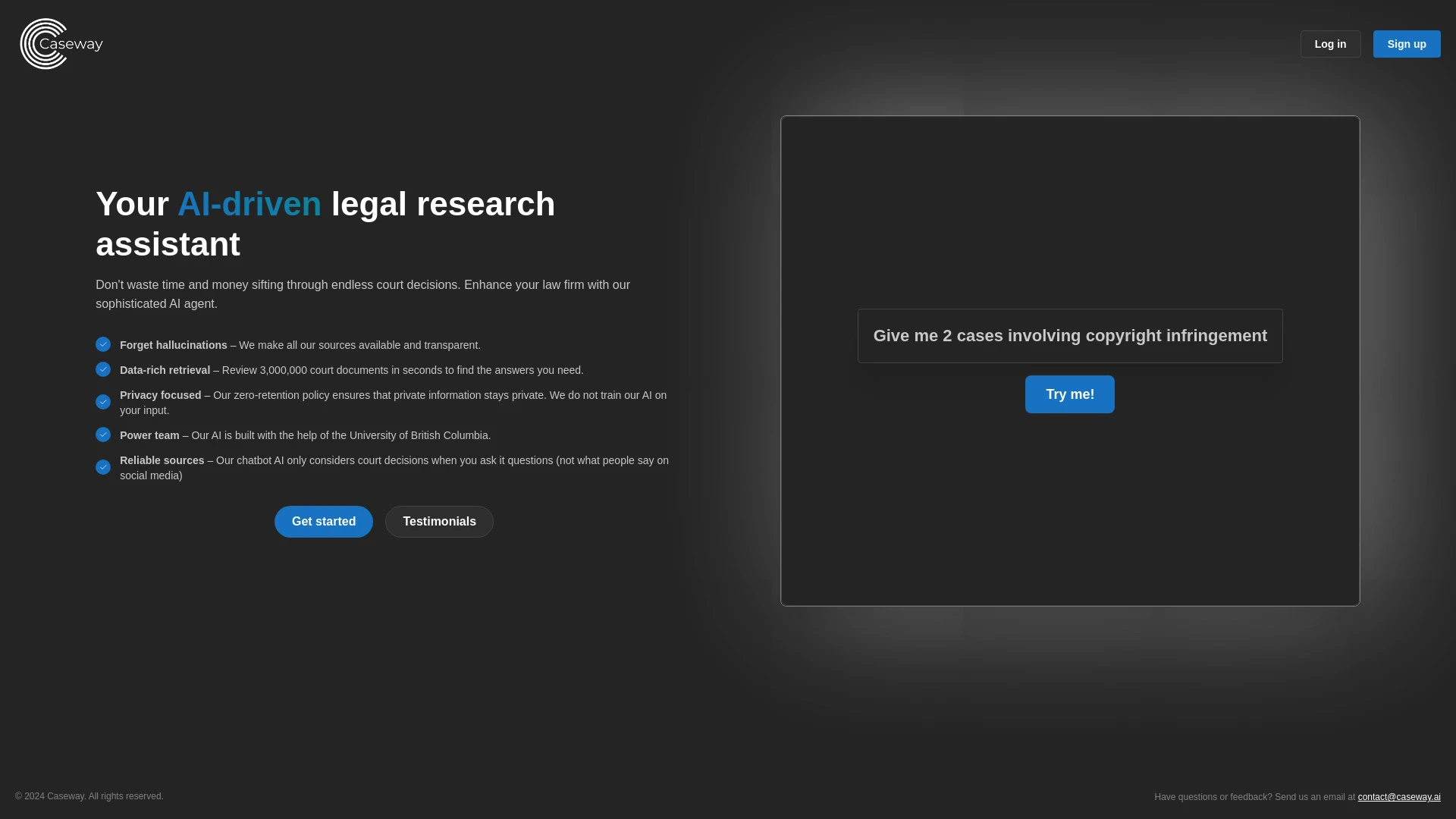
Casetext and Caseway AI are innovative legal research platforms. Casetext, launched in 2013, offers advanced AI-driven tools like CoCounsel for legal writing and research, targeting law firms and solo practitioners. Caseway AI, Kliwise's 2021 product, focuses on case management and is aimed at small to mid-sized firms, enhancing efficiency through automation.

Casetext vs Caseway AI Overview

Last updated: March 2025

Casetext

0

Ideal For

    Solo and small law firms

    Big law firms

    In-house legal departments

    Litigators

Key Strengths

    Enhanced efficiency in legal tasks

    Saves time on document preparation

    Provides accurate and comprehensive insights

Core Features

    Automated contract revision

    Critical document identification

    Legal research memo generation

    Key information extraction

    Thorough deposition outlines

Caseway AI

0

Ideal For

    Quickly access relevant case law for legal queries

    Streamline research workflows for legal professionals

    Identify precedents that affect ongoing cases

    Enhance law firm productivity

Key Strengths

    Significantly reduces research time

    Increases accuracy in legal findings

    Ensures data privacy and security

Core Features

    Rapid processing of court decisions

    Transparent and reliable source retrieval

    Zero retention policy for user privacy

    Targeted search for specific legal inquiries

    Intuitive user interface

Popularity

Very High 4,900,000 visitors
Growing popularity
Very Low Unknown number of visitors
Growing popularity

At a Glance

Casetext offers comprehensive legal research and AI-driven document analysis, excelling in brief generation and litigation insights. Its features cater to law firms seeking depth. Caseway AI focuses on streamlined case management and user-friendly interfaces, ideal for solo practitioners. Pros for Casetext include extensive resources, while its cons are cost and complexity. For Caseway, ease of use is a plus, but it lacks depth. Choose Casetext for in-depth research and Caseway for simplicity.

Pricing and Subscription Plans

Casetext offers tiered pricing with plans starting at $89/month for solo practitioners, increasing for larger teams needing advanced analytics. Additional fees apply for premium features. Caseway AI provides a more straightforward model, starting around $49/month, with no hidden costs, appealing to small firms. For larger businesses, Casetext may offer more comprehensive tools, while Caseway AI is budget-friendly for startups, making them cost-effective options based on size.

Performance Metrics

Casetext outperforms Caseway AI in accuracy, delivering precise legal insights, especially in complex case law analysis. However, Caseway AI excels in speed, providing quicker results for simpler queries. Both platforms show high reliability, but Casetext's performance shines in nuanced legal arguments while Caseway is better for rapid information retrieval.

User Experience

Casetext offers a user-friendly interface with intuitive navigation, making it easy for users to access features quickly. Its customizable options enhance the user experience, while comprehensive support resources, including tutorials and customer service, reduce the learning curve. Caseway AI, while efficient, may present a steeper learning curve due to its more complex interface. However, it provides essential navigational tools and support to assist users.

Integrations and Compatibility

Casetext integrates seamlessly with tools like Microsoft Word and Google Docs, enhancing legal research workflows. Caseway AI supports integrations with platforms such as Clio and MyCases, promoting efficient case management. Both systems streamline existing legal operations effectively.

Limitations and Drawbacks

Casetext’s limitations include reliance on specific jurisdictions and varied document accuracy, while Caseway AI may lack comprehensive data coverage and adaptability. Both can misinterpret legal nuances. Workarounds include cross-referencing with authoritative sources and manual reviews.

Frequently Asked Questions

What is the main difference between Casetext and Caseway AI?
The key difference between Casetext and Caseway AI lies in their core use cases, pricing models, and feature depth. Casetext typically focuses on specific workflows, while Caseway AI offers broader capabilities suitable for different teams and scenarios.
Which is better for teams: Casetext or Caseway AI?
Caseway AI is often a better fit for growing teams that need collaboration, governance, and integrations, while Casetext can be ideal for individuals or smaller teams who want a simpler, more focused solution.
Is Casetext more affordable than Caseway AI?
Pricing depends on your usage and plan tiers. Casetext may offer a lower entry price, while Caseway AI can provide more value at scale with advanced features included in higher-tier plans.
Can I use both Casetext and Caseway AI together?
Yes, many teams combine both tools in their workflows to cover different use cases. Always review integrations and overlapping features to avoid paying twice for similar functionality.

Related Comparisons