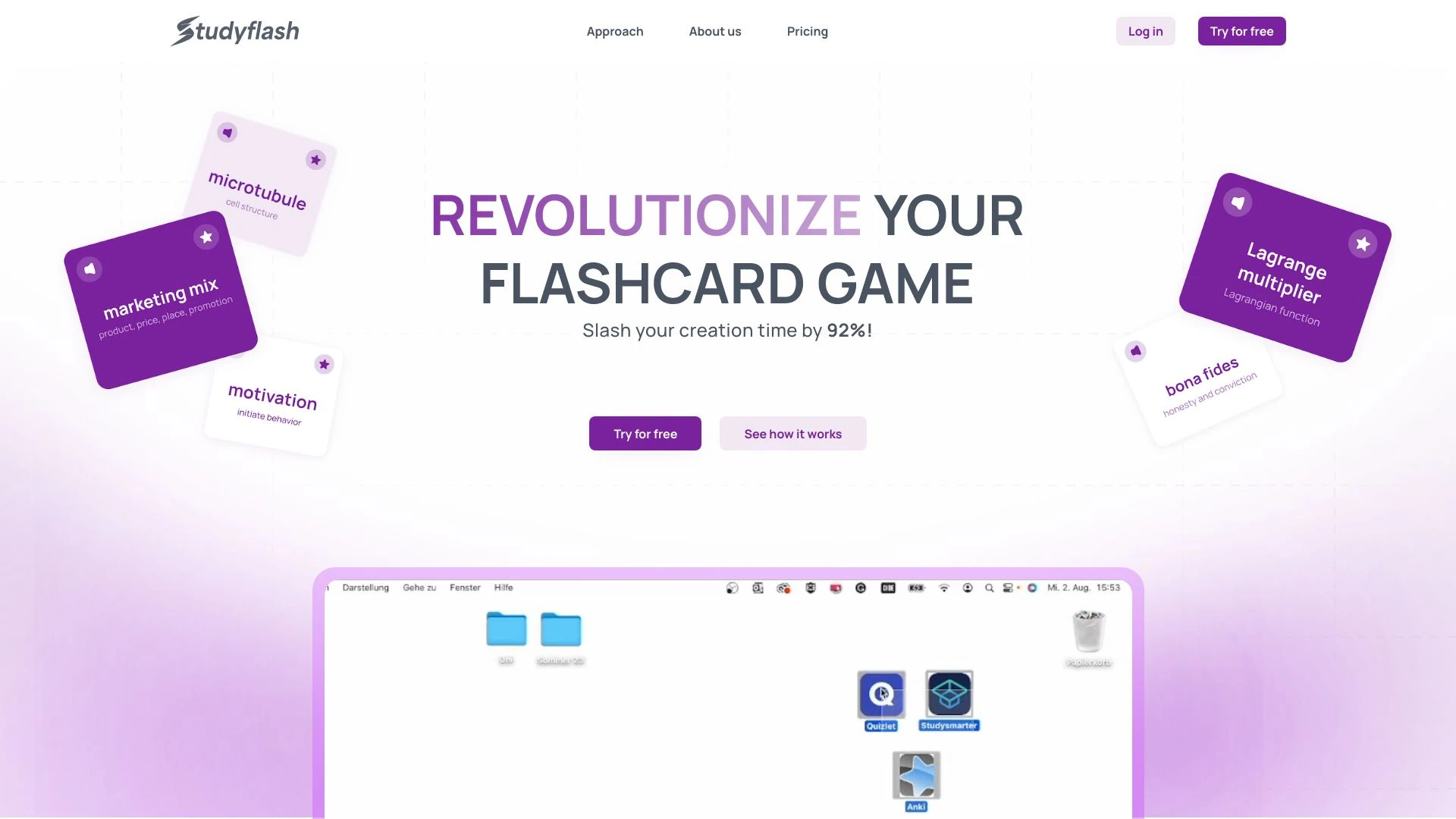
OmniSets and Studyflash are AI powered flashcard platforms designed to boost study efficiency. OmniSets excels in adaptive learning, spaced repetition, and progress tracking for exams and language learning, while Studyflash emphasizes automatic flashcard generation and personalized study plans across devices. Both serve students seeking smarter, data driven study workflows.
Prepare for exams
Learn languages
Retain information
Study efficiently
Enhances memory retention
User-friendly interface
Accessible on various devices
AI-based learning
Spaced repetition
Quiz mode
Flashcard generator
Personalized adaptive learning
Creating study materials
Preparing for exams
Learning new languages
Reviewing complex subjects
Improves study efficiency
Personalized learning experience
Easy to use
AI-powered flashcard generation
Personalized study plans
User-friendly interface
Adaptive learning techniques
Cross-device accessibility
| Factor | OmniSets | Studyflash |
|---|---|---|
| Ease of Use |
|
|
| Features |
|
|
| Value for Money |
|
|
| Interface Design |
|
|
| Learning Curve |
|
|
| Customization Options |
|
|
For learners focused on exams and language mastery, OmniSets provides strong spaced repetition, adaptive learning, and robust progress tracking. Studyflash is ideal for users who want automatic flashcard generation from source materials plus personalized study plans and collaboration. To maximize results, import notes into OmniSets to generate adaptive cards and track study sessions, or feed materials into Studyflash to build study plans and set reminders across devices.
Jamie Davis
Software Analyst
If your priority is deep memory retention through adaptive learning and structured progress tracking, OmniSets is the preferred option. If you want effortless flashcard generation from materials plus guided study plans and collaborative features, Studyflash is the better choice. The right pick depends on whether you value adaptive memory techniques or automated content creation and planning, with both offering solid entry points at no upfront cost.
OmniSets lists a zero price with a one_time billing model and a consumption based payment approach, offering entry without upfront costs. Studyflash uses a freemium model with zero price at entry and monthly billing under a subscription plan. The contrasting models reflect a trade off between immediate cost freedom and ongoing access to enhanced study plans, reminders, and collaboration features. Both emphasize accessible core features at no initial price.
No explicit speed or uptime metrics are provided for either tool. Both are web based AI platforms built around content generation and spaced repetition, with OmniSets focusing on adaptive learning and progress tracking and Studyflash on automatic generation and study plans. In the absence of published performance numbers, architectural stability and feature robustness become key indicators.
Both platforms are described as user friendly and web based. OmniSets highlights a user friendly interface and progress tracking across devices, while Studyflash emphasizes a simple interface, cross device accessibility, and the potential for collaborative study. Onboarding should be straightforward for learners familiar with flashcards and study plans.
Both tools operate on Web and emphasize cross device accessibility; no explicit third party integrations are listed in the provided data.
OmniSets does not prominently highlight collaboration features, while Studyflash prioritizes collaborative studying as an advantage which may influence team use. The clearest trade off is between a strong focus on adaptive learning with OmniSets and automatic generation with Studyflash, depending on user needs.