Sponsored by BrandGhost BrandGhost is a social media automation tool that helps content creators efficiently manage and schedule their social media... Visit now

FormStory versus Yay! Forms

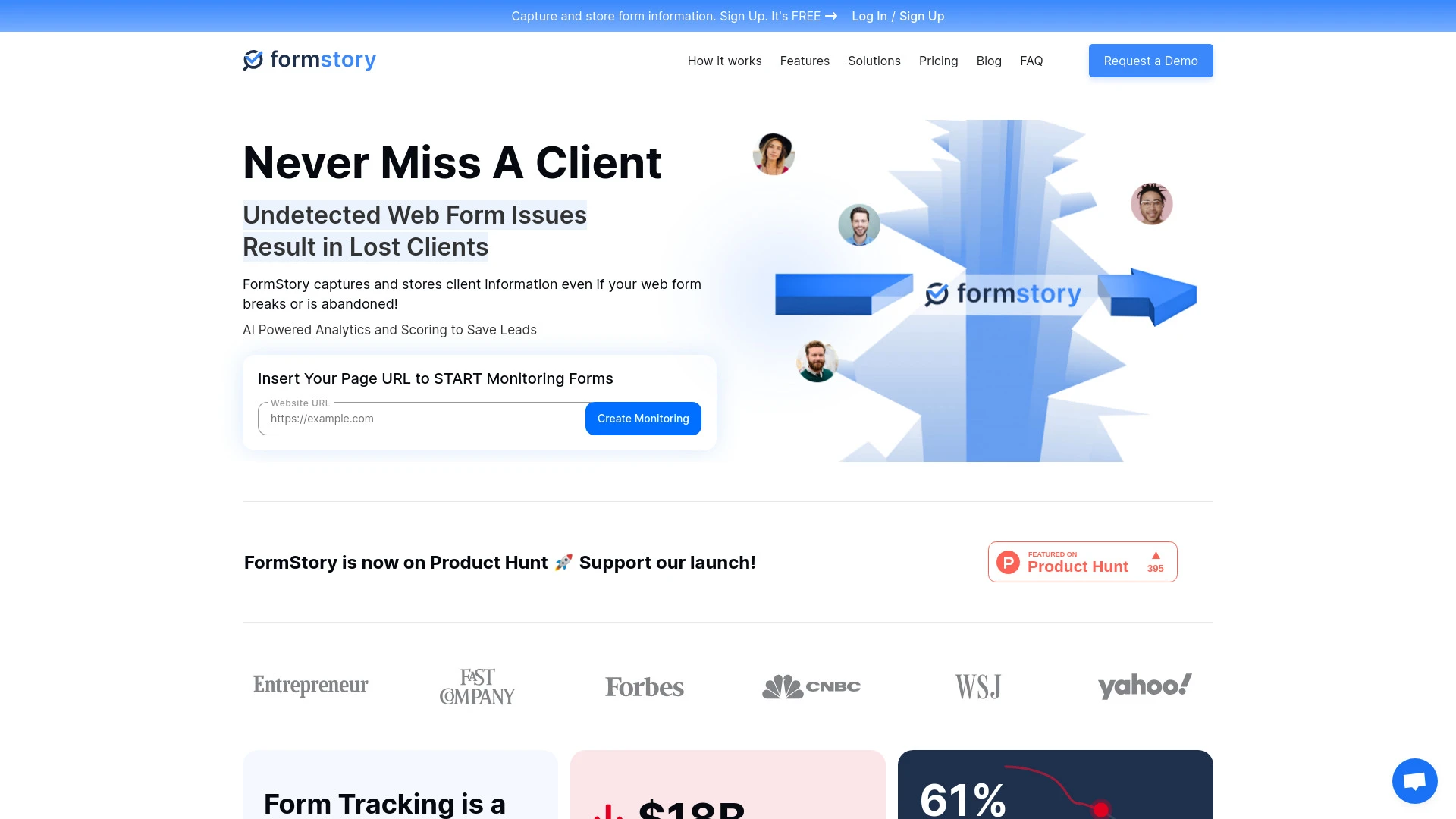
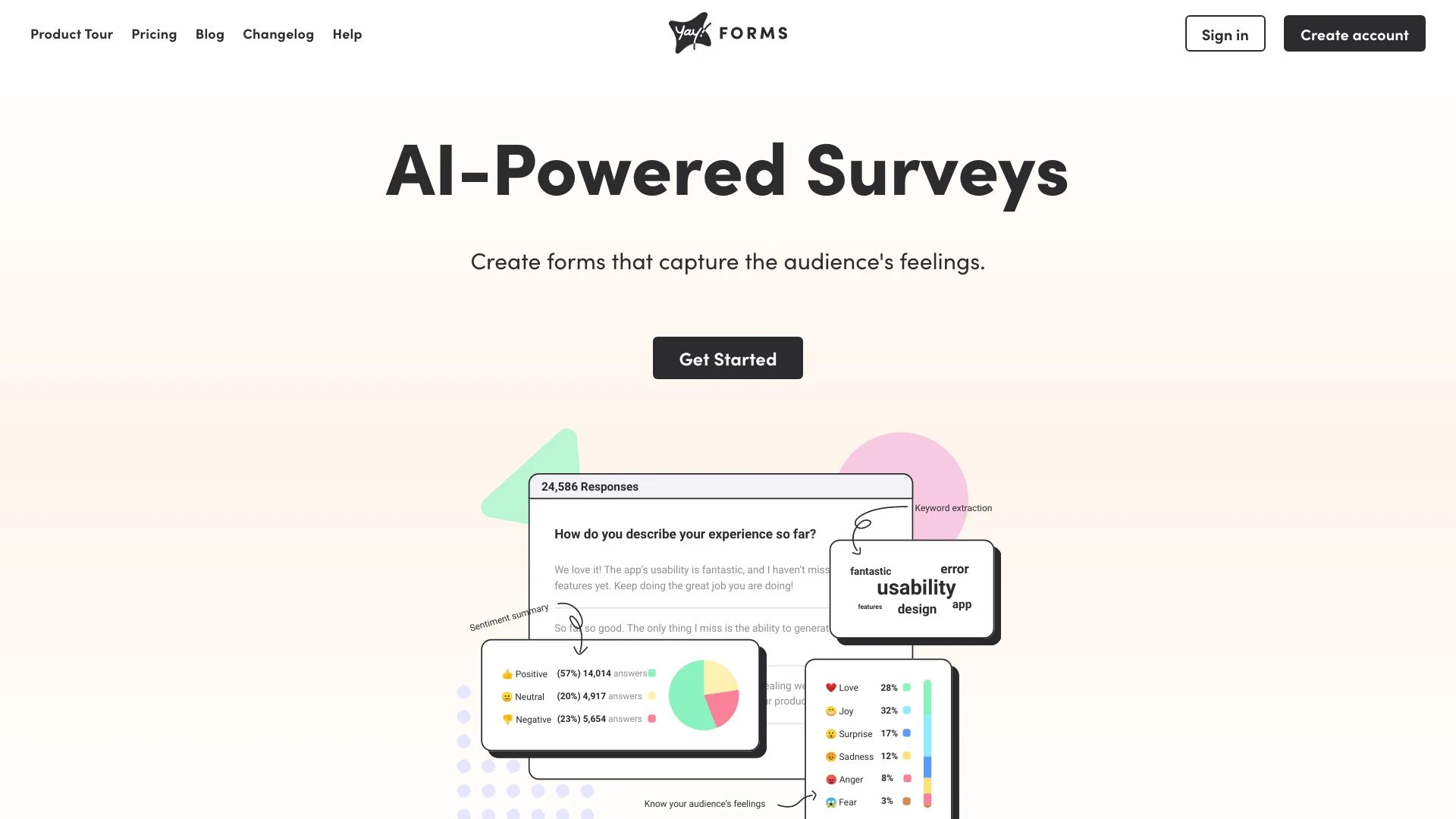
FormStory specializes in monitoring web forms to recover lost leads caused by technical failures, delivering instant notifications and analytics. Yay! Forms offers an AI driven form and survey builder that captures audience sentiments with real time analytics. Both serve marketers, product teams, and researchers, but they excel in distinct scenarios.

FormStory vs Yay! Forms Overview

Last updated: May 2026

FormStory

0

Ideal For

    Businesses preventing lead loss from malfunctioning forms

    Marketing agencies improving form submission rates

    Educational institutions monitoring student enrollment

    Companies enhancing customer service response through form accuracy

Key Strengths

    Prevents potential revenue loss

    Enhances lead generation accuracy

    Provides actionable insights through analytics

Core Features

    Entry capture during form failures

    Instant notifications for broken forms

    Detailed analytics and lead scoring

    Universal compatibility with form services

Yay! Forms

0

Ideal For

    Conducting market research

    Collecting customer feedback

    Managing event registrations

    Generating leads

Key Strengths

    Easy-to-use interface for form design

    AI features enhance data collection

    Various customization options available

Core Features

    Responsive design for all devices

    Customizable templates for branding

    Advanced logic for tailored user experiences

    Integration with tools like Google Sheets and Slack

    Real-time analytics for response tracking

Popularity

Low 5,300 visitors
Growing popularity
Medium 29,300 visitors
Growing popularity

Decision Matrix

Factor FormStory Yay! Forms
Ease of Use
7.5/10
8.2/10
Features
8.2/10
7.8/10
Value for Money
8.0/10
8.0/10
Interface Design
8.1/10
7.5/10
Learning Curve
7.0/10
8.0/10
Customization Options
8.3/10
7.0/10

Quick Decision Guide

Choose FormStory if:
  • You want to streamline form creation seamlessly.
  • You aim to enhance data collection efficiency.
  • You value customizable templates for easy use.
  • You look for real-time collaboration features.
  • You seek robust analytics for insights and improvement.
Choose Yay! Forms if:
  • You want seamless integration with other platforms.
  • You aim for user-friendly, customizable form designs.
  • You value real-time data collection and reporting.
  • You look for robust security and data privacy features.
  • You want responsive support and resources for users.

What Our Experts Say

For organizations focused on preserving leads from every submission, FormStory is recommended with practical tips to pair monitoring with alert escalation and analytics. For teams needing agile data collection and audience insights, Yay! Forms shines with advanced logic, real time analytics, and seamless tool integrations. Use case specific onboarding and template selection will accelerate value.
JD

Jamie Davis

Software Analyst

At a Glance

If lead integrity and loss prevention are the priority, FormStory is the clear choice, especially where form failures threaten revenue. If building marketing ready forms and surveys with AI driven personalization is the goal, Yay! Forms dominates. For mixed needs, a combined approach aligned to use case yields the best outcomes.

Pricing and Subscription Plans

FormStory offers a 0.00 freemium entry with monthly paid tiers via subscription for advanced features, delivering accessible entry and scalable value. Yay! Forms is a 19.00 per month paid subscription, designed for AI driven form building and analytics. The pricing reflects two ends of the spectrum: cost effective lead protection versus feature rich form creation and insights.

Performance Metrics

No published speed benchmarks are provided. Both tools run as web based platforms with real time features for analytics and notifications; for FormStory the emphasis is reliability in capturing submissions during form failures, while Yay! Forms focuses on real time response tracking through AI powered analytics.

User Experience

FormStory emphasizes quick signup and seamless monitoring with instant alerts for broken forms, minimizing setup friction for marketing teams. Yay! Forms offers templates, a user friendly interface, and customizable branding to speed form design. Both present intuitive onboarding, but Yay! Forms leans into AI assisted personalization and journey logic for deeper engagement.

Integrations and Compatibility

FormStory promises universal compatibility with any form service, ensuring broad coverage. Yay! Forms integrates with Google Sheets, Slack, and Zapier, enabling smooth data flows across popular tools.

Limitations and Drawbacks

FormStory specializes in form monitoring and lead capture, which may limit advanced form design capabilities. Yay! Forms emphasizes AI driven features, which can introduce newer workflows and learning curves for teams new to automated insights.

Frequently Asked Questions

What is the main difference between FormStory and Yay! Forms?
The key difference between FormStory and Yay! Forms lies in their core use cases, pricing models, and feature depth. FormStory typically focuses on specific workflows, while Yay! Forms offers broader capabilities suitable for different teams and scenarios.
Which is better for teams: FormStory or Yay! Forms?
Yay! Forms is often a better fit for growing teams that need collaboration, governance, and integrations, while FormStory can be ideal for individuals or smaller teams who want a simpler, more focused solution.
Is FormStory more affordable than Yay! Forms?
Pricing depends on your usage and plan tiers. FormStory may offer a lower entry price, while Yay! Forms can provide more value at scale with advanced features included in higher-tier plans.
Can I use both FormStory and Yay! Forms together?
Yes, many teams combine both tools in their workflows to cover different use cases. Always review integrations and overlapping features to avoid paying twice for similar functionality.

Related Comparisons