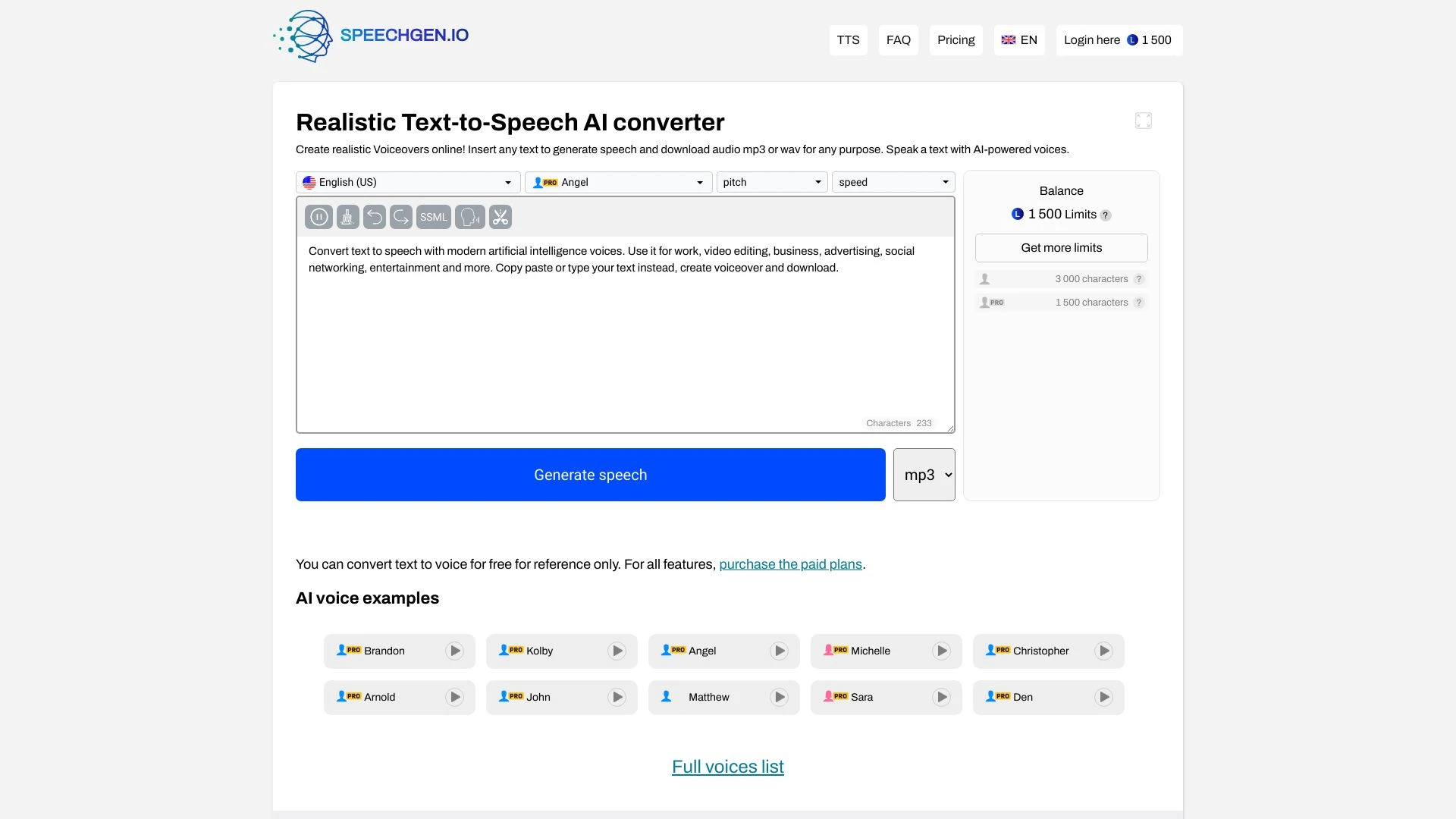
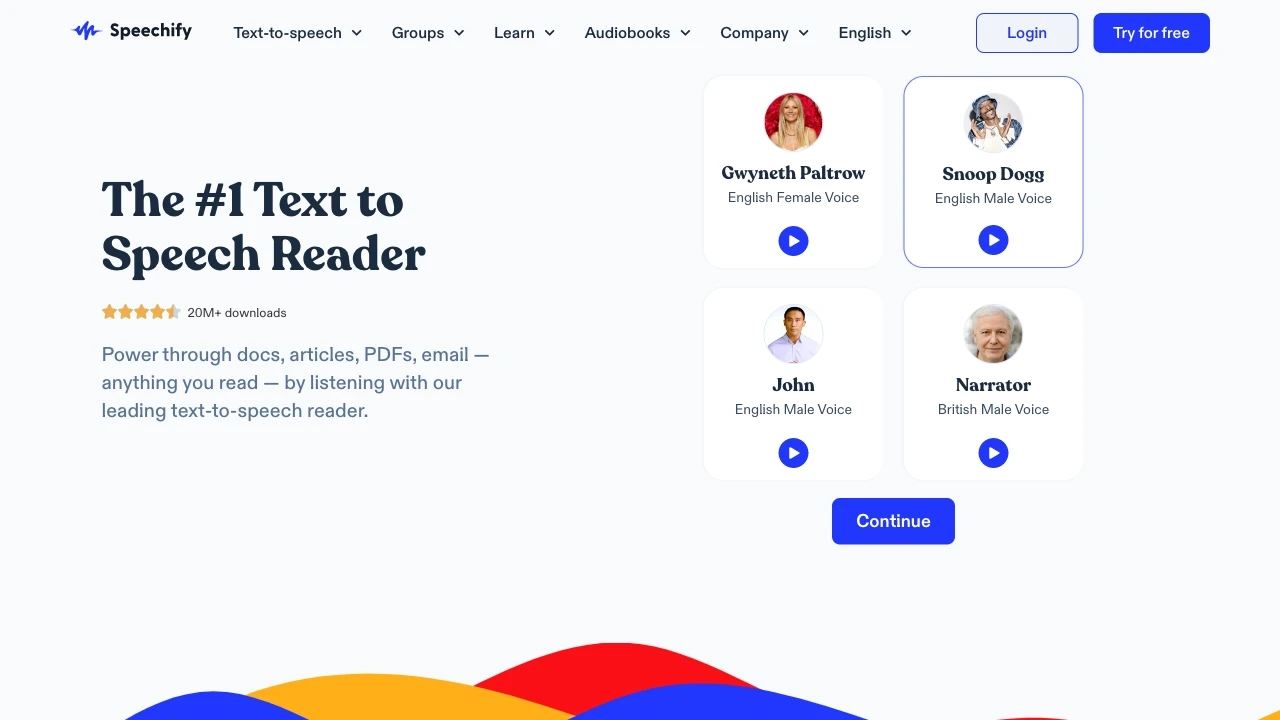
SpeechGen.io and Speechify are both AI powered text to speech tools, but they target different users. SpeechGen.io excels in professional voiceovers with SSML and high customization for videos and e learning, while Speechify emphasizes consumer accessibility across devices with AI features like voice cloning and dubbing. Both aim to simplify content creation and listening experiences through natural sounding audio.
Creating voiceovers for videos
Producing educational content
Generating audio ads
Enhancing presentations
Produces natural-sounding voiceovers
Offers extensive customization options
User-friendly and easy to navigate
High-quality voice generation
Customizable speech parameters
Supports multiple audio formats
SSML for advanced customization
User-friendly interface
Individuals: Enhance reading and comprehension
Education: Support for students with disabilities
Business: Streamline communication with voice-overs
Content creation: Generate audio for videos
Easy to use
Accessible on multiple platforms
Enhances learning capabilities
Text-to-speech
Online listening
Chrome extension
Mobile apps
Voice Cloning
| Factor | SpeechGen.io | Speechify |
|---|---|---|
| Ease of Use |
|
|
| Features |
|
|
| Value for Money |
|
|
| Interface Design |
|
|
| Learning Curve |
|
|
| Customization Options |
|
|
For teams producing video content and training materials, SpeechGen.io provides predictable output with configurable voice parameters and SSML, making it a solid choice for scalable voiceovers. For individuals and educators who need on the go listening and easy access across devices, Speechify delivers convenience with voice cloning and dubbing for creative projects. Implementation tips: start with a small pilot to compare voice naturalness, test SSML conformance on SpeechGen.io, and assess licensing for commercial use on Speechify. If you rely on cross device consumption, Speechify pairs well with reading workflows, while SpeechGen.io excels in production ready assets.
Jamie Davis
Software Analyst
The best choice depends on your primary workflow. For professional production and broadcast ready voiceovers, SpeechGen.io is the clear winner. For personal learning, accessibility across devices, and creative features like AI voice cloning, Speechify is the stronger option. In practice, organizations may adopt a targeted approach by selecting the tool that best fits the dominant use case or piloting both to compare output quality and licensing terms.
Both tools use a subscription model with monthly billing and a price tag shown as zero paid in the data, indicating ongoing access rather than a one time fee. Exact tiers are not specified, but SpeechGen.io highlights commercial usage and regular updates, signaling enterprise ready value. Speechify emphasizes broad accessibility across platforms and AI features as part of its value proposition. In practice, pricing flexibility and tiered plans may vary by region and platform.
No explicit speed, reliability, or scalability metrics are provided. Both rely on cloud based text to speech, with SpeechGen.io offering SSML based customization and Speechify delivering cross platform accessibility and AI driven enhancements; architecture wise both aim for scalable TTS through modern platforms, but specific metrics are not published.
SpeechGen.io is described as user friendly with an intuitive interface and SSML support enabling advanced customization, making it suitable for professional workflows. Speechify emphasizes ease of use, quick playback of selected text, and seamless experiences across Chrome, iOS, and Android with mobile apps and extensions. Onboarding is likely straightforward for both, but the learning curve will differ by depth of features such as voice cloning or SSML.
SpeechGen.io is web based with support for SSML and multiple audio formats; Speechify offers Chrome extension and mobile apps with compatibility to Google Docs Gmail and web articles.
Based on the available information, SpeechGen.io emphasizes professional voice generation and SSML customization, while Speechify emphasizes consumer oriented features like voice cloning and AI dubbing; explicit limitations are not listed in the provided data.