Herramientas de IA recomendadas
5Hemos analizado el mercado. Estas herramientas ofrecen características específicas para crear libros de audio.
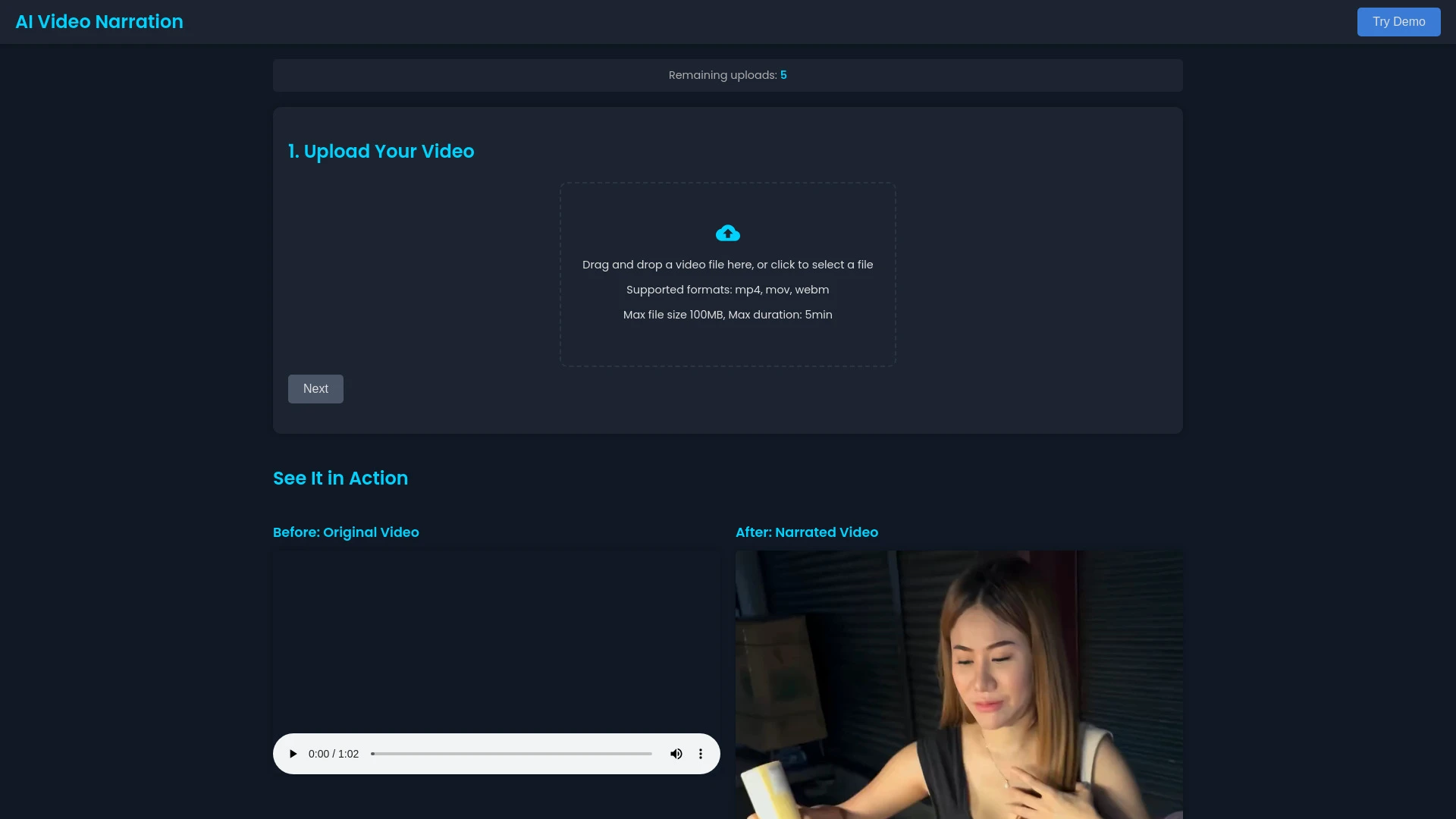
AI Video Narration permite a los usuarios crear narraciones de video profesionales sin esfuerzo con tecnología de IA.
- Narración generada por IA en diversos idiomas
- Interfaz de usuario sencilla que no requiere habilidades técnicas
- Salida de audio de alta calidad
Análisis de IA
Por qué usar esta IA AI Video Narration para Crear Libros de Audio?

Biography Studio AI
Plataforma impulsada por IA que transforma historias personales en libros audiolibros y podcasts para la preservación del legado
- Entrevistas y escritura con inteligencia artificial: Convierte el habla en narrativas estructuradas
- Transcripción y edición de voz: Simplifica la perfección de historias
- Exportación en múltiples formatos: Ofrece libros digitales audiolibros y podcasts
Análisis de IA
Por qué usar esta IA Biography Studio AI para Crear Libros de Audio?
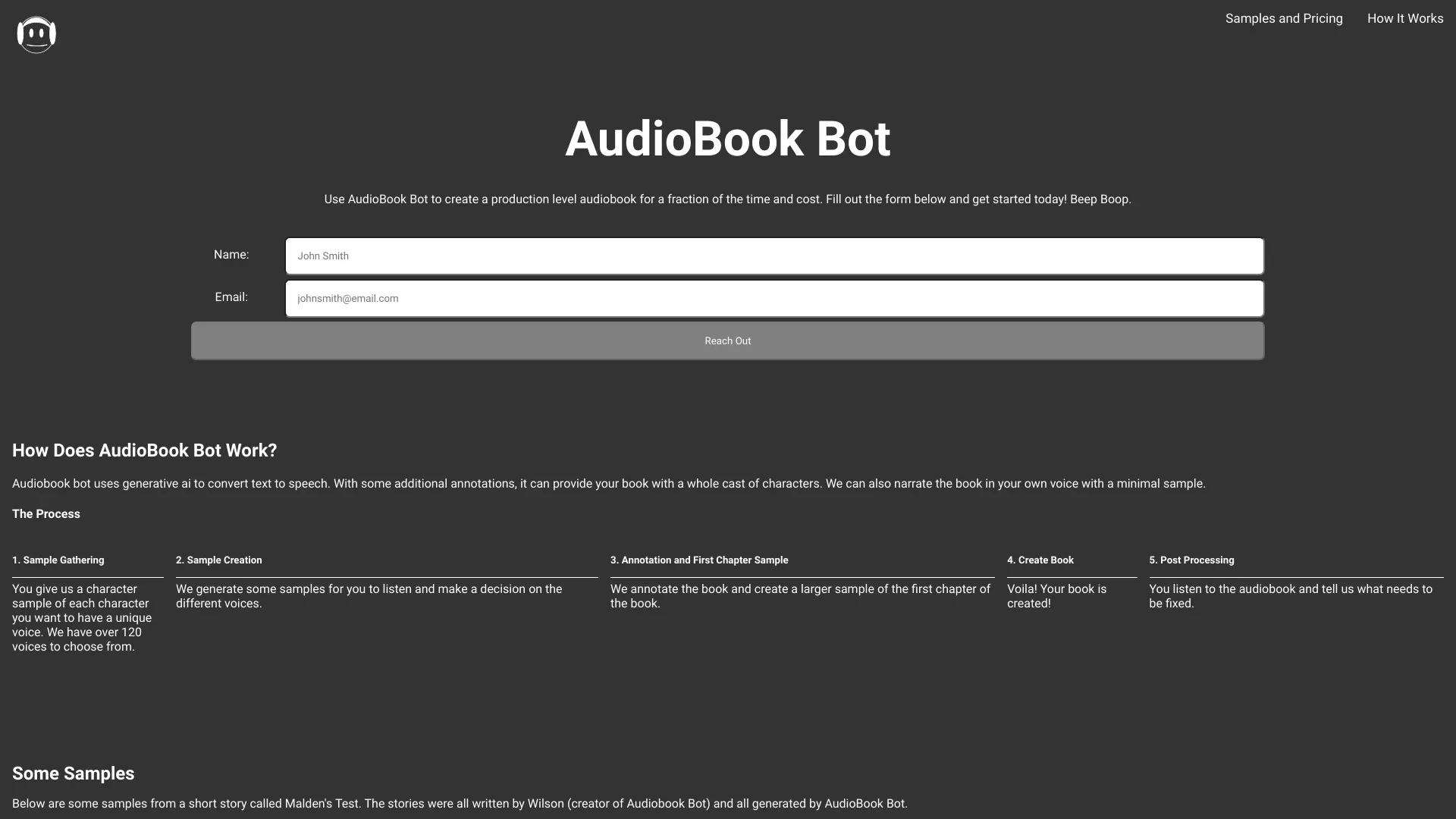
AudioBook Bot
AudioBook Bot permite a los usuarios convertir texto en audiolibros atractivos utilizando tecnología de inteligencia artificial generativa.
- Generativ AI para texto a voz
- Múltiples voces licenciadas
- Narración en la voz del usuario
Análisis de IA
Por qué usar esta IA AudioBook Bot para Crear Libros de Audio?
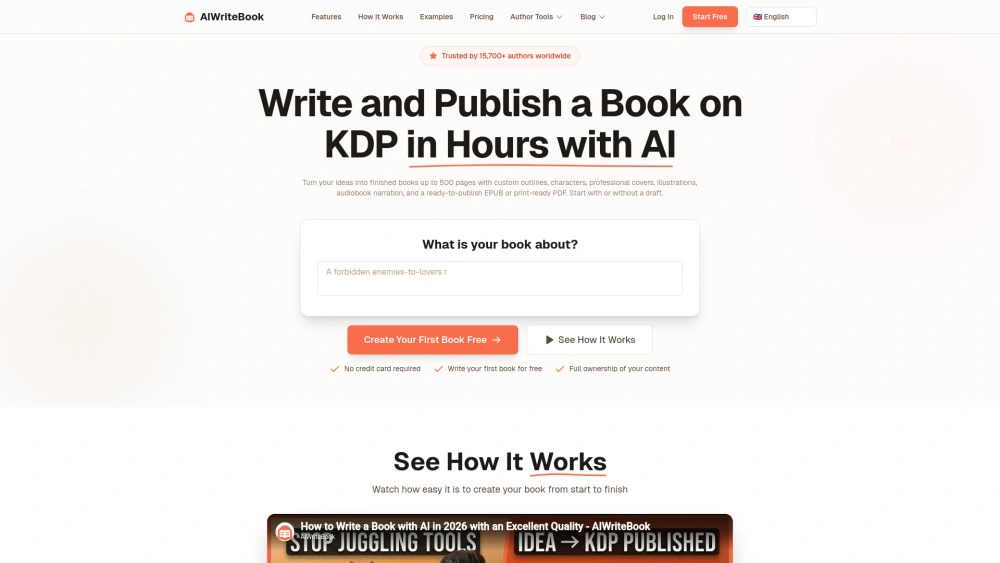
AIWriteBook
AIWriteBook es un creador de libros impulsado por IA para autores, que convierte ideas en libros publicados.
- Importar manuscritos existentes: Integra sin problemas DOCX, PDF, EPUB, TXT
- IA escribe con tu voz: coincide con el estilo personal
- Exportación KDP con un clic: exporta EPUB y PDF impresos
Análisis de IA
Por qué usar esta IA AIWriteBook para Crear Libros de Audio?
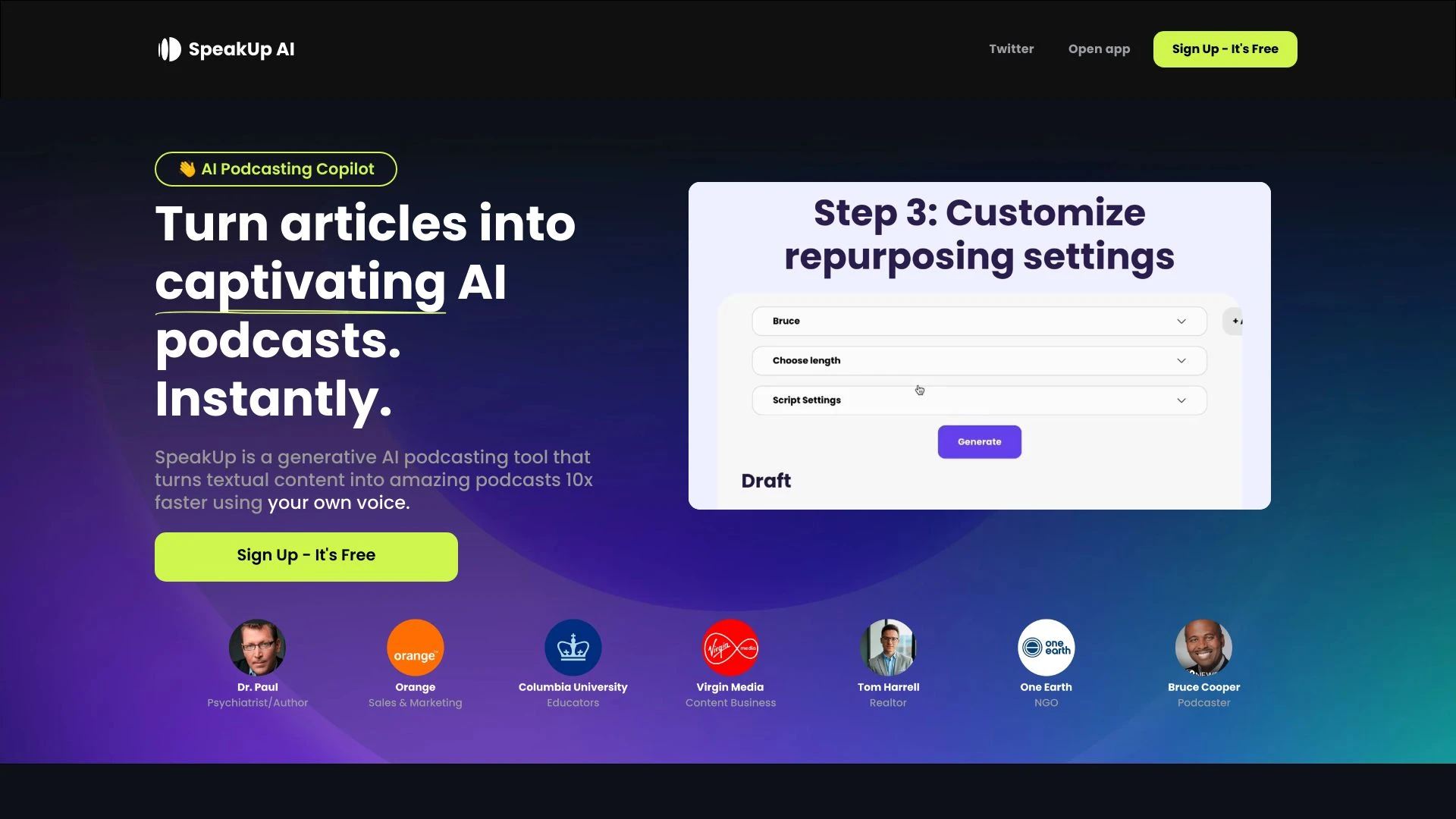
SpeakUp AI es una herramienta impulsada por IA que transforma sin esfuerzo contenido escrito en podcasts atractivos con un solo clic.
- Reutilización de Artículos con IA
- Edición de Guiones con IA
- Mezcla Automática de Música con IA
Análisis de IA
Por qué usar esta IA SpeakUp AI - AI Podcasting Copilot para Crear Libros de Audio?
Flujos de trabajo prácticos
No solo compres herramientas—construye un sistema. Aquí están 3 maneras probadas de integrar la IA en tu crear libros de audio proceso.
Workflow 1: First Successful Create Audio Books Task (Beginner)
- Define target length, voice style, and sample rate for the audiobook project.
- Generate a 5-minute sample chapter using a neutral TTS voice and start a basic audio editor to align pacing and breaths.
- Apply auto-leveling, noise reduction, and basic equalization; export a 1-minute test for reviewer feedback.
Workflow 2: Daily Optimization for Regular Users
- Create a reusable script that batches chapter text to speech with consistent voice profiles and pronunciations.
- Set up a template for chapter breaks, metadata (title, author, narration length), and file naming conventions.
- Run automated quality checks (pronunciation, pacing, and volume normalization) and push updates to a review queue.
Workflow 3: Full Automation for Power Users
- Integrate transcription, voice cloning safeguards, and background music gating into a single pipeline.
- Define SLAs for each stage (transcription, TTS narration, sound design, and final mastering).
- Schedule automated exports in multiple formats (MP3, AAC) with embedded chapter markers and cover art pull.
Prompts efectivas for Crear Libros de Audio
Copiar y personalizar estos prompts probados para obtener mejores resultados de tus herramientas de IA
Principiante
Eres un asistente de audiolibros. Convierte un capítulo de 2 páginas en un archivo de audio MP3 con una voz neutra, con una pausa de 1 segundo entre párrafos, y exporta a 44.1 kHz estéreo con metadatos ID3 para título y autor.Avanzado
Rol: Productor de audio. Contexto: una novela de ciencia ficción de 10 capítulos. Restricciones: mantener un ritmo constante, aplicar reglas de pronunciación para términos inventados, insertar una compuerta musical solo entre capítulos, formato de salida: MP3 segmentado con marcadores de capítulo y metadatos de portada.Análisis
Evalúe las salidas de Crear libros de audio: compare tres perfiles de voz a través del mismo capítulo para naturalidad, ritmo y precisión de pronunciación; proporcione una recomendación clasificada con puntuaciones cuantificadas y consejos de mejora accionables.Qué es Create Audio Books AI y para quién es
Beneficios de usar IA para crear audiolibros
- Tiempos de producción más rápidos desde el texto hasta el audio terminado.
- Estilo de narración consistente a lo largo de los capítulos con voces personalizables.
- Edición automatizada, reducción de ruido y masterización para reducir el trabajo manual.
- Eficiencia de costos a gran escala para editores y plataformas de aprendizaje.
- Beneficios de accesibilidad a través de la velocidad de reproducción ajustable y marcadores de capítulo.
Cómo Elegir la IA Correcta para Crear Libros de Audio
- Calidad de voz y opciones de personalización (tono, ritmo, énfasis).
- Compatibilidad de la canalización: transcripción, TTS, edición, masterización y formatos.
- Seguridad de datos y licencias para contenido de audiolibros.
- Estructura de costos y escalabilidad para el tamaño de tu catálogo.
- Soporte para diccionarios de pronunciación y cobertura lingüística.
Buenas prácticas para implementar IA de creación de audiolibros
- Definir guías de narración claras y diccionarios de pronunciación antes de la automatización.
- Realizar un piloto con un solo capítulo para calibrar voces y ritmo.
- Incorporar puntos de control de revisión humana para el control de calidad.
- Actualizar regularmente los modelos con comentarios para mantener la consistencia.
- Documentar formatos, metadatos y estándares de nomenclatura de archivos para editores.
IA para Crear Libros de Audio: Clave Estadísticas
Adopción global de Create Audio Books AI creció del 18% en 2023 al 46% en 2025 entre editoriales de tamaño medio.
El tiempo promedio para producir un audiolibro de 6 capítulos cayó un 42% al usar flujos de trabajo asistidos por IA.
98% de los equipos reportan una mayor consistencia en la narración con las herramientas de gestión de voz de IA
Las opciones de personalización de voz aumentaron un 72% en las principales plataformas de IA en 2025–2026
El costo por hora trabajada de audio finalizado disminuyó un 28% para estudios que adoptan pipelines de masterización automatizados
el 70% de los nuevos autores aprovechó la IA para probar múltiples estilos de narración antes de finalizar una publicación
Preguntas Frecuentes
Obtén respuestas a las preguntas más comunes sobre el uso de herramientas de IA para crear libros de audio .
Create Audio Books AI se refiere a herramientas y flujos de trabajo impulsados por IA que convierten texto en audio hablado con funciones como narración de texto a voz, control de pronunciación, personalización de voz, edición y masterización para producir audiolibros listos para publicar
Comienza trazando un esquema de tu libro, eligiendo una voz TTS adecuada, configurando el ritmo y la pronunciación, luego ejecuta un pequeño capítulo a través de una canalización automatizada que maneje la transcripción, la narración y el master básico antes de una revisión humana
Las herramientas de IA en la nube ofrecen actualizaciones rápidas y procesamiento escalable, mientras que las herramientas locales brindan control sobre la seguridad de los datos y flujos de trabajo sin conexión. Para principiantes, las opciones en la nube con licencias y soporte claros suelen ser más fáciles de comenzar.
Los problemas comunes incluyen errores de pronunciación, ritmo inconsistente, ruido y desalineación de los límites de los capítulos. Ajustar los perfiles de voz, añadir diccionarios de pronunciación y aplicar una masterización de audio selectiva normalmente solucionan estos problemas.
Categorías de herramientas de IA relacionadas
Explora otras categorías de herramientas de IA similares a Crear Libros de Audio eso podría interesarte
Generador de Video AI
AI Video Generators utilize algorithms to create videos from text, images, or audio, enhancing content creation. Applica...
Editor de Video IA
AI Video Editors leverage machine learning algorithms to automate video editing tasks, enhancing efficiency and creativi...
Escritura de historias con IA
AI story writing utilizes algorithms and natural language processing to generate narratives, enhancing creativity and ef...
Asistente de Repropósito de IA
The AI Repurpose Assistant employs advanced algorithms to transform content across formats, enhancing creativity and eff...
Generador de Voz de Celebridad AI
The AI Celebrity Voice Generator uses deep learning to create realistic voice replicas of celebrities. By analyzing voic...
Escritura de libros con IA
AI Book Writing leverages machine learning to assist authors in crafting narratives, generating ideas, and editing. Tool...