Recommended AI Tools
5We've analyzed the market. These tools offer specific features for write api documentation.
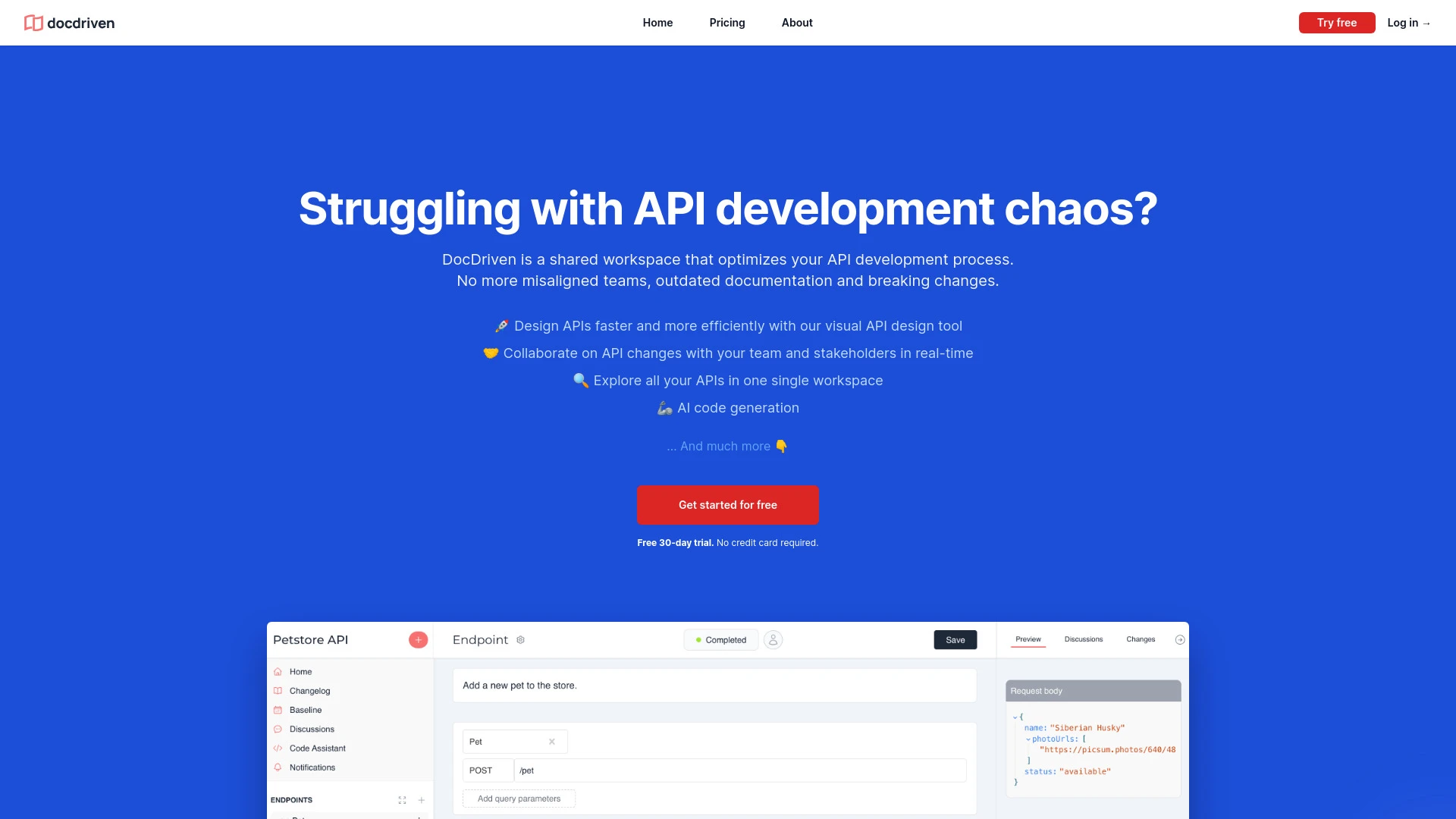
DocDriven
DocDriven is an AI-powered API design tool that enhances collaboration and streamlines API development with automated code generation.
- Visual API design tool
- real-time collaboration with teams
- AI code generation
AI Analysis
Why use this AI DocDriven for Write Api Documentation?
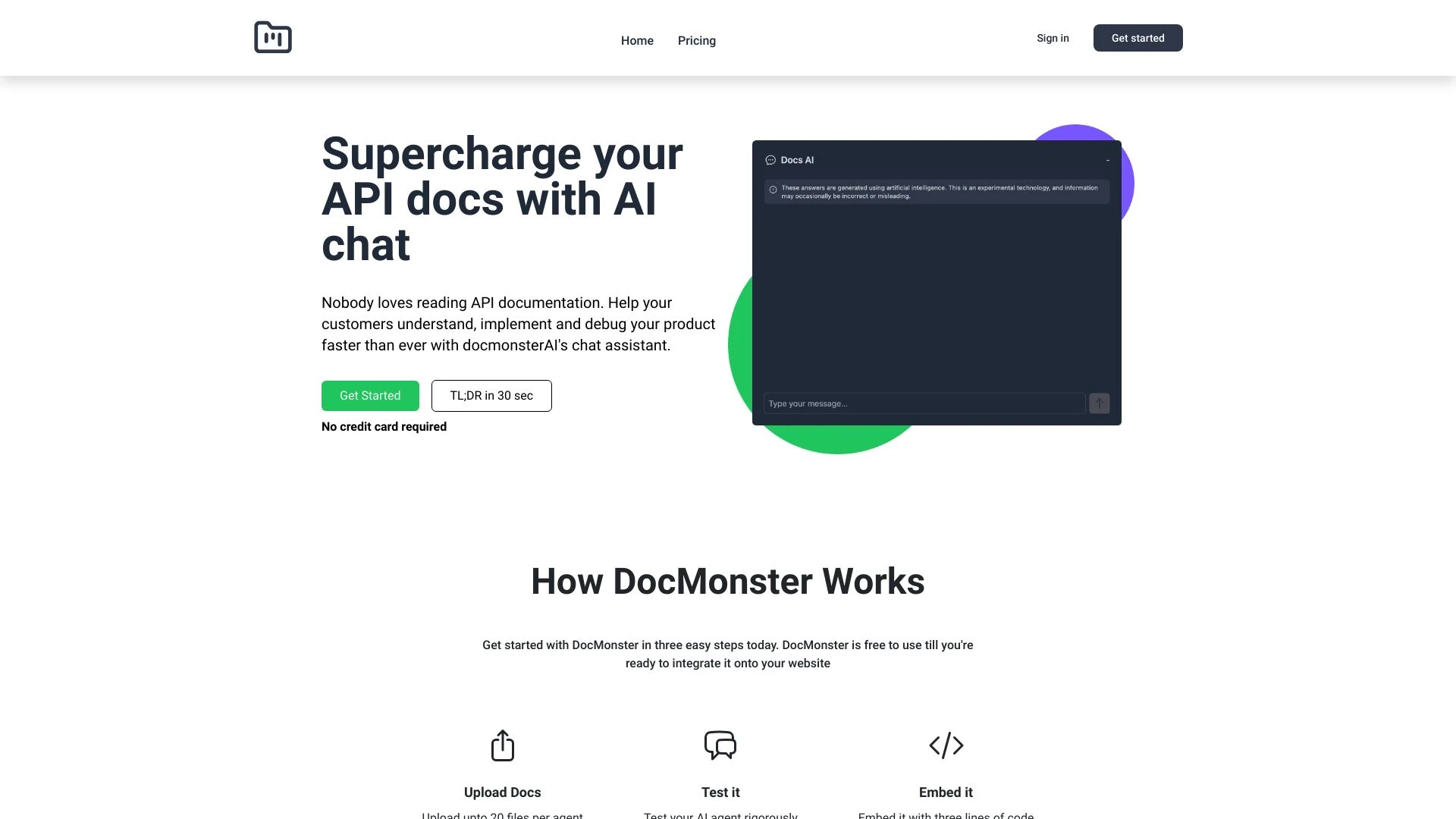
DocMonster.ai
DocMonster.ai is an AI chatbot tailored for enhancing API documentation engagement, simplifying user interaction with technical content.
- AI-powered customer support
- Quick API integration
- Code debugging assistance
AI Analysis
Why use this AI DocMonster.ai for Write Api Documentation?
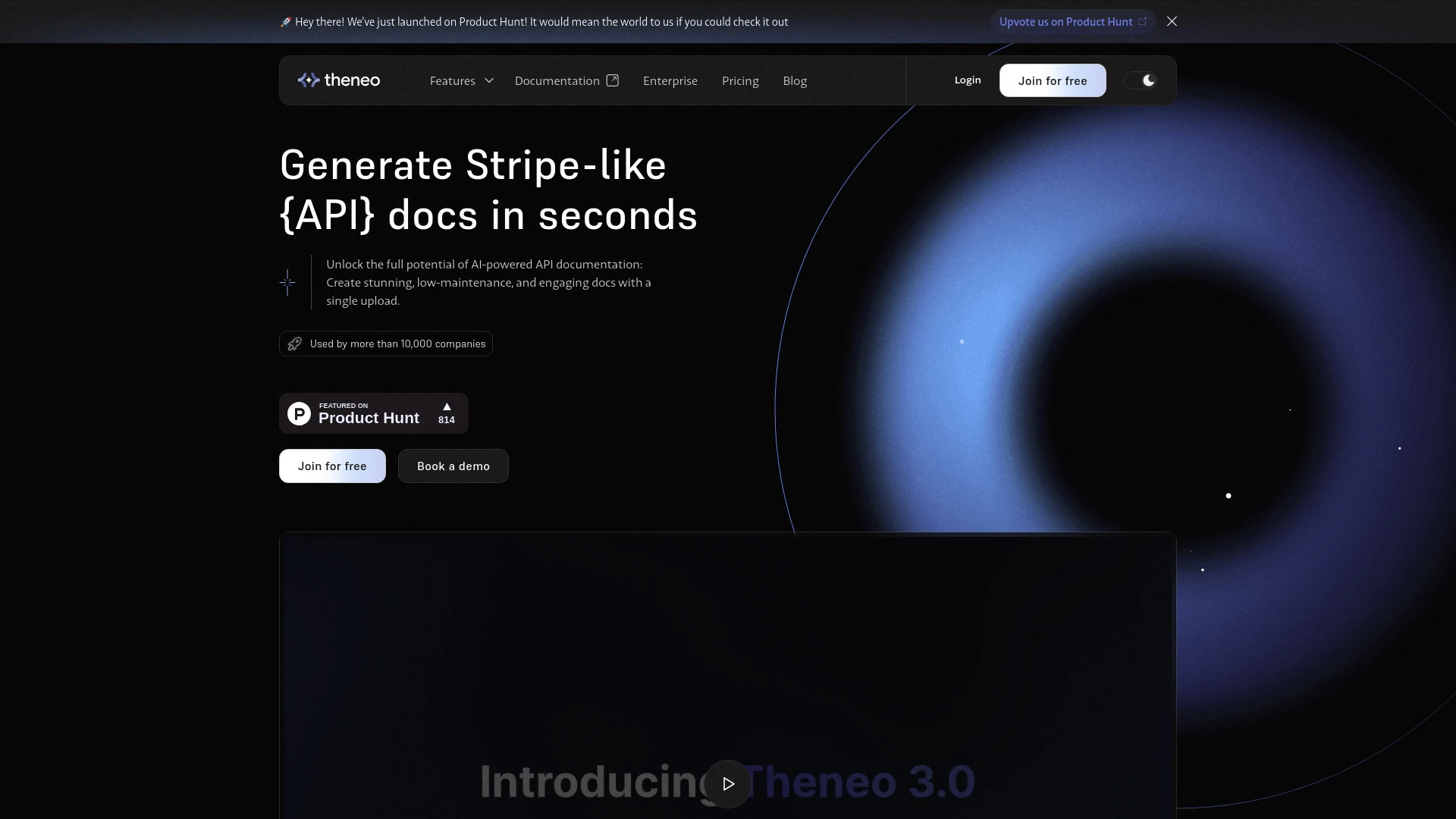
Theneo
Theneo simplifies API documentation with AI, enabling teams to easily generate, customize, and manage their documentation.
- Automated API documentation generation
- AI-powered search and answers
- Live collaboration for documentation editing
AI Analysis
Why use this AI Theneo for Write Api Documentation?
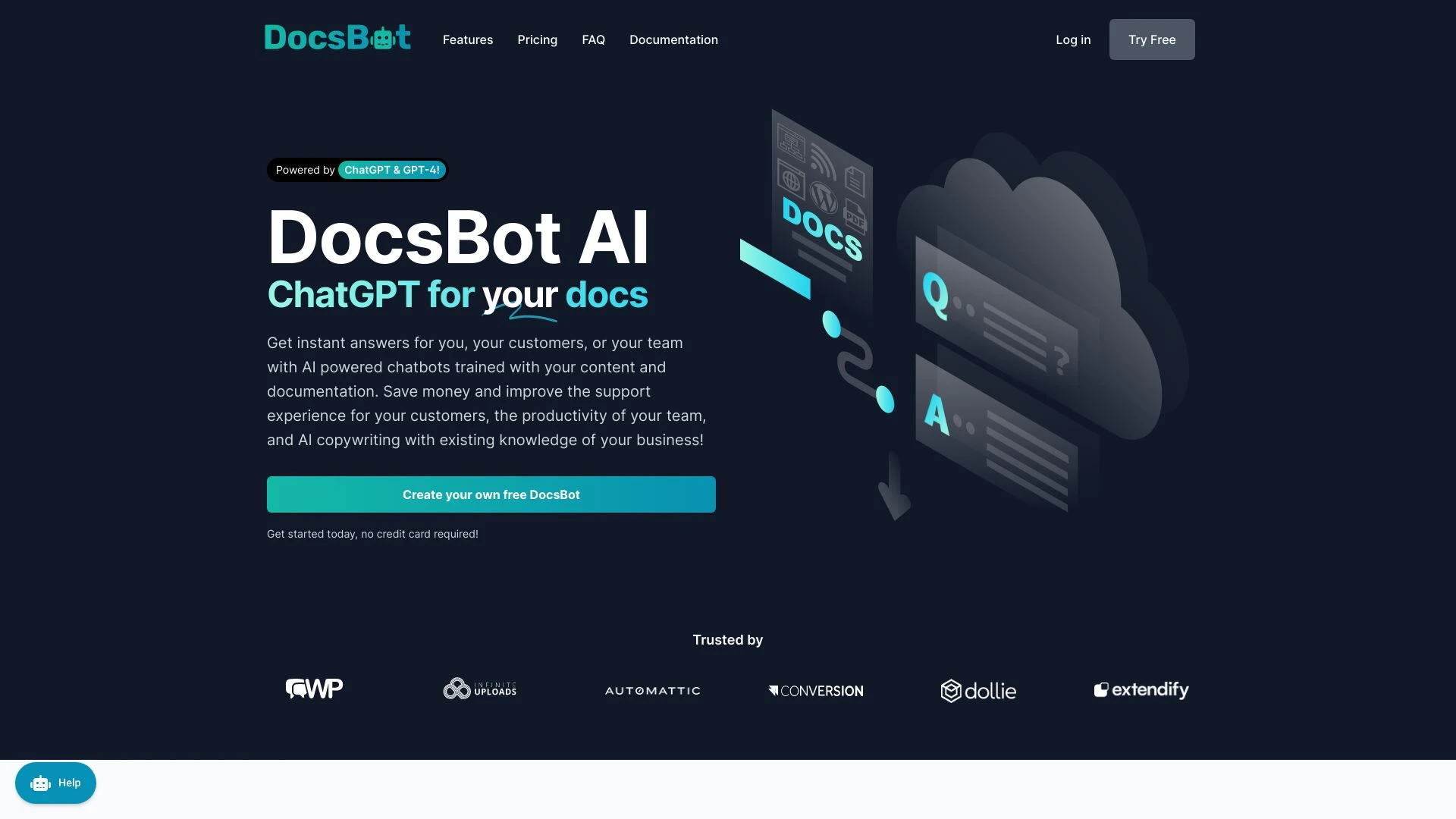
DocsBot AI
DocsBot AI enables users to create custom chatbots that leverage documentation for enhanced customer support and content generation.
- Custom chatbots tailored to your documentation
- Instant question/answer capabilities with formatted outputs
- User-friendly embeddable widgets
AI Analysis
Why use this AI DocsBot AI for Write Api Documentation?

DocWhizz
DocWhizz is an AI assistant designed to aid developer-focused companies by enhancing documentation and improving developer experience.
- Effortlessly master APIs
- Improve API discoverability
- Provide personalized integration examples
AI Analysis
Why use this AI DocWhizz for Write Api Documentation?
Practical Workflows
Don't just buy tools—build a system. Here are 3 proven ways to integrate AI into your write api documentation process.
Workflow 1: Launch your first Write Api Documentation task with confidence (Complete beginner)
- Define API endpoints and data models in a simple spec (e.g., Swagger/OpenAPI) for the AI to consume.
- Generate a first draft of endpoint descriptions, parameter notes, and response schemas using a guided template.
- Review for accuracy against the source API, then publish the documentation to a static site or docs portal.
Workflow 2: Streamline daily Write Api Documentation work (Regular user)
- Set up a reusable doc template for new APIs and versioning notes.
- Ingest OpenAPI/Swagger changes and run automated doc regeneration with changelog generation.
- Validate parameter formats and error codes with a quick AI-assisted review and publish updates.
Workflow 3: Fully automate Write Api Documentation (Power user)
- Create a continuous integration hook that triggers AI documentation generation on API spec changes.
- Configure AI to produce multi-format outputs: REST reference, SDK docs, and developer guides.
- Implement automated QA checks (consistency, link validation, and example accuracy) before deployment.
Effective Prompts for Write Api Documentation
Copy and customize these proven prompts to get better results from your AI tools.
Beginner: Simple task, clear output
You are an API documentation assistant. Given this OpenAPI spec, generate a concise endpoint reference for the GET /v1/users endpoint, including summary, path, query parameters, responses, and a single example request and response. Use standard terminology and consistent formatting.Advanced: Role + context + constraints + format
Act as a senior API technical writer. From the OpenAPI 3.0 spec and inline code annotations, produce a fully fleshed API reference for POST /v2/orders, including authentication notes, request bodies, status codes, error schemas, and a multi-format set of examples (cURL, HTTPie). Ensure consistency with existing endpoints and adhere to the corporate style guide. Output in Markdown with sections: Summary, Endpoint, Parameters, Request, Response, Examples, Errors.Analysis: Evaluate/compare/optimize Write Api Documentation outputs
Compare two generated API docs for the same endpoint. Identify inconsistencies in parameter naming, response schemas, and example accuracy. Propose concrete edits to align terminology, fix errors, and improve readability. Provide a side-by-side diff in a structured format.
What is Write Api Documentation AI?
Write Api Documentation AI is the application of artificial intelligence to generate, structure, and maintain API documentation from API specifications, code annotations, and usage patterns. It’s designed for developers, product teams, and technical writers who need accurate, up-to-date docs that describe endpoints, parameters, responses, and usage examples.
Who it’s for: developers creating public or private APIs, technical writers maintaining reference docs, and teams seeking faster documentation cycles with consistent quality.
Benefits of AI for Write Api Documentation
- Faster doc generation from API specs
- Consistent terminology and formatting across endpoints
- Automated versioning and changelog creation
- Automatic example requests/responses and error codes
- Improved accuracy through automated validation checks
- Seamless multi-format outputs (reference, guides, SDK docs)
How to Choose AI Tools for Write Api Documentation
- OpenAPI/Swagger compatibility and automatic spec ingestion
- Template customization for endpoint sections and examples
- Quality gates: link validation, example accuracy, and consistency checks
- Versioning and change-tracking support
- Integrations with CI/CD, hosting platforms, and developer portals
Best Practices for Implementing Write Api Documentation AI
- Define clear prompts and templates for endpoints, parameters, and responses
- Anchor AI outputs to authoritative sources (specs, code comments)
- Implement automated QA checks prior to publishing
- Segment documentation by audience (developers, operators, partners)
- Establish a human review breakpoint for critical docs
AI for Write Api Documentation: Key Statistics
In 2025, 68% of mid-to-large tech teams adopted AI-assisted Write Api Documentation workflows.
Average time to publish API docs dropped by 42% after implementing AI tools with automated QA.
70% of API teams reported improved consistency across reference docs and guides when using AI templates.
64% of AI-assisted docs included automated example generation for at least 3 common endpoints.
AI tooling reduced post-release documentation updates by 35% within the first six months.
Among beginners, 82% reported faster learning curves when using beginner-friendly AI prompts for API docs.
Frequently Asked Questions
Get answers to the most common questions about using AI tools for write api documentation .
Write Api Documentation AI refers to AI-powered tools and workflows that generate, augment, and maintain API documentation (endpoints, parameters, responses, examples) from API specs and code. It helps teams create accurate, up-to-date docs for developers.
Begin with a structured API spec (OpenAPI/Swagger), choose an AI tool that supports API doc generation, configure templates for endpoints and examples, run a generation pass, review for accuracy, and publish. Iteratively refine prompts and templates for consistency.
Paid tools often offer broader integration, reliability, and support, which is important for API ecosystems. Free options can be suitable for small projects or experimentation but may require more manual oversight and fewer automation features.
Inaccurate examples can arise from partial context, outdated specs, or mismatches between code and docs. Ensure the AI has access to current API specs, use strict templates, and include validation steps and example verification in the workflow.
Related AI Tool Categories
Explore other AI tool categories similar to Write Api Documentation that might interest you.
AI Developer Documentation
AI Developer Documentation provides essential guidelines for creating, integrating, and maintaining AI systems. It enhan...
AI Developer Tools
AI Developer Tools empower developers to create intelligent applications by providing libraries, APIs, and frameworks. F...
AI Documents Assistant
The AI Documents Assistant leverages artificial intelligence to streamline document creation, management, and analysis....
AI Trading Bot Assistant
The AI Trading Bot Assistant harnesses artificial intelligence to analyze market data, execute trades, and optimize port...
AI API Design
AI API design integrates machine learning and natural language processing to enhance software functionality. For instanc...
AI Voice Assistants
AI voice assistants, like Siri, Alexa, and Google Assistant, employ natural language processing to understand and respon...