
Sponsored by BrandGhost BrandGhost is a social media automation tool that helps content creators efficiently manage and schedule their social media... Visit now

Intapp versus Intuit

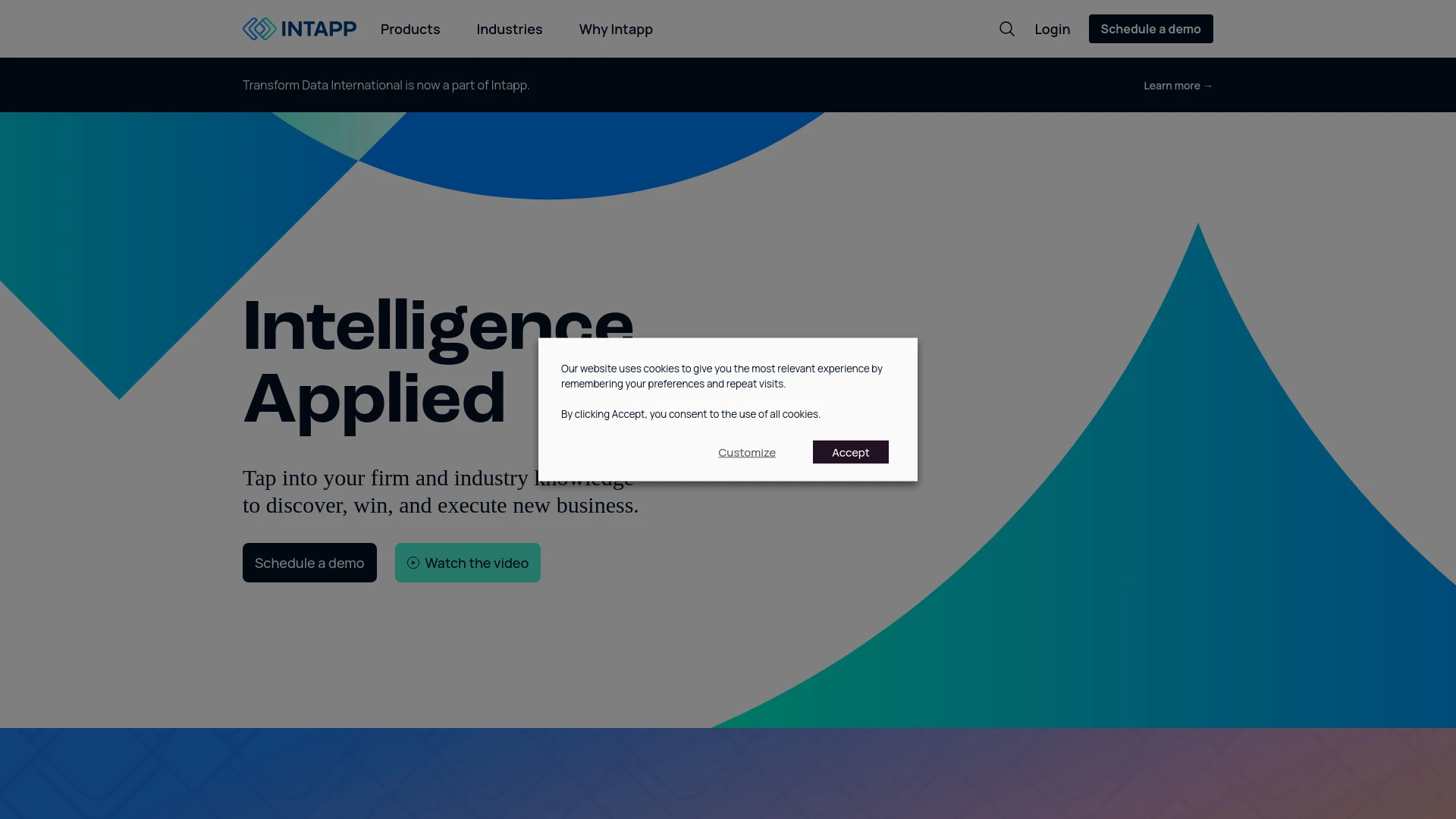
Intuit, launched in 1983, specializes in financial software like QuickBooks and TurboTax, targeting small businesses and individuals. Intapp, founded in 2000, focuses on professional services automation, catering to law firms and consulting firms. Both companies excel in streamlining operations but serve distinct markets, with Intuit emphasizing personal finance and Intapp serving enterprise needs.

Intapp vs Intuit Overview

Last updated: June 2025

Intapp

0

Ideal For

    Enhancing client relationship management

    Streamlining business development efforts

    Ensuring regulatory compliance

    Automating timekeeping processes

Key Strengths

    Tailored solutions for finance and professional services

    Improves business operations significantly

    Enhances client engagement and satisfaction

Core Features

    AI-driven software solutions

    Client relationship management

    Compliance oversight

    Time-keeping automation

    Business development tools

Intuit

0

Ideal For

    Small businesses leveraging QuickBooks for accounting

    Individuals using TurboTax for accurate tax filing

    Self-employed users managing finances with Credit Karma

    Companies enhancing marketing with Mailchimp

Key Strengths

    Easy-to-use tools

    Comprehensive suite covering various financial needs

    Strong customer support

Core Features

    TurboTax: Efficient tax filing

    Credit Karma: Simplified financial tracking

    QuickBooks: Comprehensive business management

    Mailchimp: Automated email marketing

    User-friendly interfaces

Popularity

Very High 120,300 visitors
Growing popularity
Very High 101,500,000 visitors
Growing popularity

Decision Matrix

Factor Intapp Intuit
Ease of Use
7.8/10
7.5/10
Features
8.5/10
8.0/10
Value for Money
8.0/10
8.0/10
Interface Design
7.5/10
7.0/10
Learning Curve
6.0/10
7.0/10
Customization Options
9.0/10
6.5/10

Quick Decision Guide

Choose Intapp if:
  • You want seamless integration with existing systems.
  • You aim for enhanced collaboration among teams.
  • You value data-driven decision-making.
  • You look for improved compliance and risk management.
  • You seek streamlined workflows for efficiency.
Choose Intuit if:
  • You want seamless integration with financial tools.
  • You aim for user-friendly interfaces and navigation.
  • You value robust customer support and resources.
  • You look for accurate tax calculations and filing.
  • You want real-time financial insights and reporting.

What Our Experts Say

Intuit excels in financial management for small businesses, offering robust accounting, payroll, and tax solutions. Its user-friendly interface simplifies bookkeeping. Conversely, Intapp specializes in professional services, focusing on project management and client engagement. It shines in data integration and workflow automation for law firms and consultancies. Common challenges include integration complexity in Intapp, while Intuit often faces scalability issues for larger enterprises.
JD

Jamie Davis

Software Analyst

At a Glance

Intuit focuses on financial management with products like QuickBooks, beneficial for small to medium businesses for accounting and tax solutions. Pros include user-friendly software and strong customer support. Cons are limited scalability. In contrast, Intapp specializes in practice management for professional services firms, offering robust project management. Pros include comprehensive integration and industry focus. Cons are higher costs. Recommendation: Choose Intuit for accounting needs; prefer Intapp for project management in professional services.

Pricing and Subscription Plans

Intuit offers various pricing tiers, such as QuickBooks Online at $25-$150/month, suitable for freelancers to small businesses. Intapp, targeting larger firms, generally charges based on custom quotes, reflecting complexity and scale. Intuit has few additional fees, while Intapp may include implementation costs. Smaller businesses find Intuit more cost-effective, whereas larger firms may benefit from Intapp's tailored solutions, despite potentially higher expenses.

Performance Metrics

Intuit excels in speed and user-friendly interfaces, making financial processes swift. Intapp, specialized in professional services, boasts higher accuracy in data integrations and compliance. Reliability benchmarks show Intuit performs better in small business applications, while Intapp proves superior in complex legal and financial environments, ensuring industry-specific needs are met effectively.

User Experience

Intuit offers a user-friendly interface with intuitive navigation, making it accessible even for beginners. It provides customizable dashboards but has a steeper learning curve for advanced features. Intapp, designed for professionals in the legal and financial sectors, features a more complex interface with advanced customization options. Its navigation may challenge new users, but extensive support resources, including tutorials and forums, enhance the experience.

Integrations and Compatibility

Intuit integrates seamlessly with over 650 apps like PayPal, Square, and Shopify, enhancing user workflows. Intapp focuses on legal and professional services, supporting integrations with Microsoft Office, Relativity, and various CRM systems, ensuring compatibility with industry-specific tools.

Limitations and Drawbacks

Intuit’s key limitations include limited scalability for larger enterprises and potential integration issues with other tools. Intapp may struggle with user onboarding and higher costs. Workarounds include seeking third-party integrations for Intuit and utilizing training resources for Intapp.

Frequently Asked Questions

What is the main difference between Intapp and Intuit?
The key difference between Intapp and Intuit lies in their core use cases, pricing models, and feature depth. Intapp typically focuses on specific workflows, while Intuit offers broader capabilities suitable for different teams and scenarios.
Which is better for teams: Intapp or Intuit?
Intuit is often a better fit for growing teams that need collaboration, governance, and integrations, while Intapp can be ideal for individuals or smaller teams who want a simpler, more focused solution.
Is Intapp more affordable than Intuit?
Pricing depends on your usage and plan tiers. Intapp may offer a lower entry price, while Intuit can provide more value at scale with advanced features included in higher-tier plans.
Can I use both Intapp and Intuit together?
Yes, many teams combine both tools in their workflows to cover different use cases. Always review integrations and overlapping features to avoid paying twice for similar functionality.

Related Comparisons