Sponsored by BrandGhost BrandGhost is a social media automation tool that helps content creators efficiently manage and schedule their social media... Visit now

NanoClaw versus ZeroClaw

NanoClaw vs ZeroClaw Overview

Last updated: February 2026

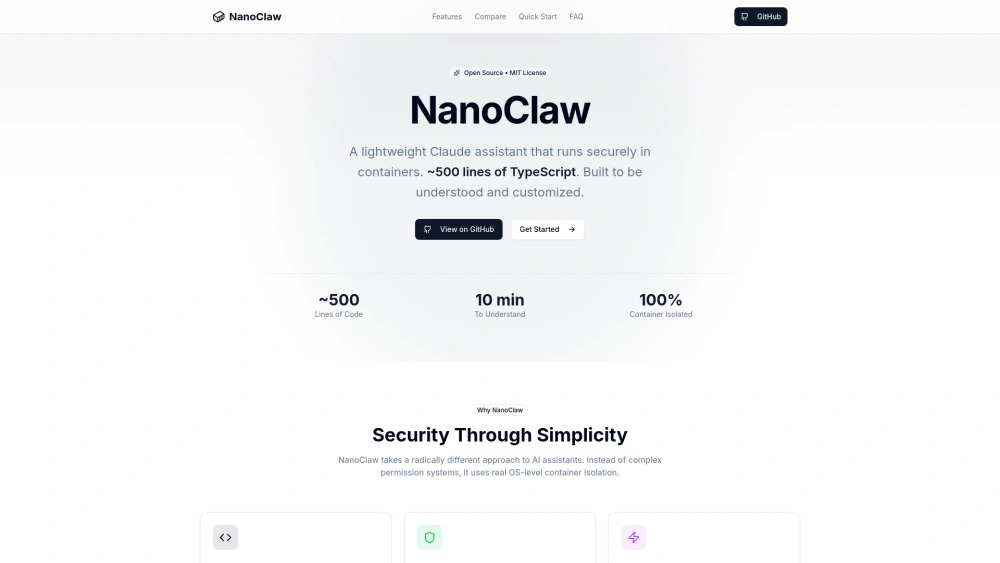
NanoClaw

0

Ideal For

    Sales Pipeline automation and reporting

    Documentation maintenance by reviewing git history

    AI News briefing compiling sources

    Email management with Gmail for summaries and drafting

Key Strengths

    Lightweight and fast: ~500 lines of TS

    OS-level container isolation: enhances security

    Open, customizable codebase: easy to tailor

Core Features

    OS-level container isolation: Ensures sandboxed, secure operation

    Minimalist TypeScript codebase: Easy understanding and customization

    WhatsApp integration: Direct messaging automation

    Web access & data fetching: Real-time information gathering

    Scheduled tasks: Automated workflows on a timer

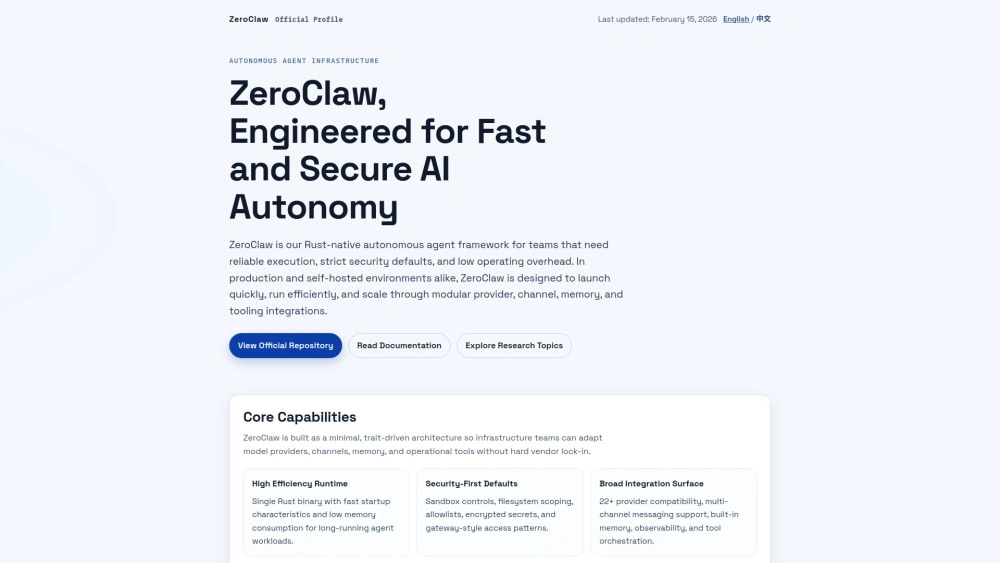
ZeroClaw

0

Ideal For

    Running 24/7 autonomous agents on Raspberry Pi

    Automating cross-platform bot workflows (Telegram, Discord, Slack)

    Local developer automation for code and system tasks

    Long-running automation on constrained servers

Key Strengths

    Low memory footprint: ~7.8 MB peak RSS

    Fast startup: <0.38s cold, <10ms warm

    Security-first defaults: sandboxing and encrypted secrets

Core Features

    Rust-native architecture: High performance with minimal runtime footprint

    Security-first defaults: Sandbox controls and encrypted secrets

    22+ provider integrations: Flexible, vendor-agnostic workflows

    Multi-channel support: CLI, Telegram, Discord, Slack

    Hybrid memory system: SQLite-based vector retrieval

Popularity

Very Low Unknown number of visitors
Growing popularity
Very Low Unknown number of visitors
Growing popularity

Frequently Asked Questions

What is the main difference between NanoClaw and ZeroClaw?
The key difference between NanoClaw and ZeroClaw lies in their core use cases, pricing models, and feature depth. NanoClaw typically focuses on specific workflows, while ZeroClaw offers broader capabilities suitable for different teams and scenarios.
Which is better for teams: NanoClaw or ZeroClaw?
ZeroClaw is often a better fit for growing teams that need collaboration, governance, and integrations, while NanoClaw can be ideal for individuals or smaller teams who want a simpler, more focused solution.
Is NanoClaw more affordable than ZeroClaw?
Pricing depends on your usage and plan tiers. NanoClaw may offer a lower entry price, while ZeroClaw can provide more value at scale with advanced features included in higher-tier plans.
Can I use both NanoClaw and ZeroClaw together?
Yes, many teams combine both tools in their workflows to cover different use cases. Always review integrations and overlapping features to avoid paying twice for similar functionality.