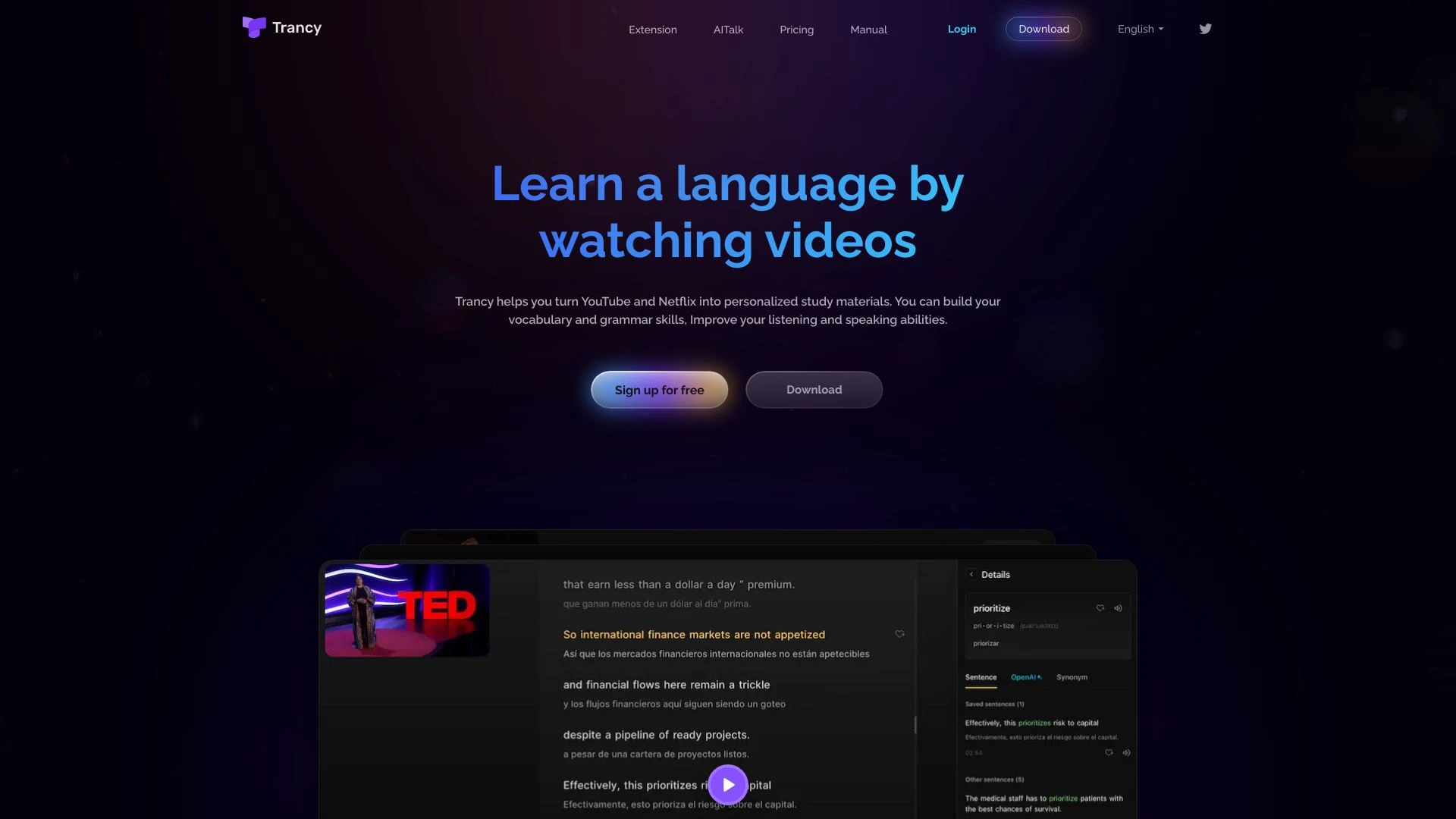
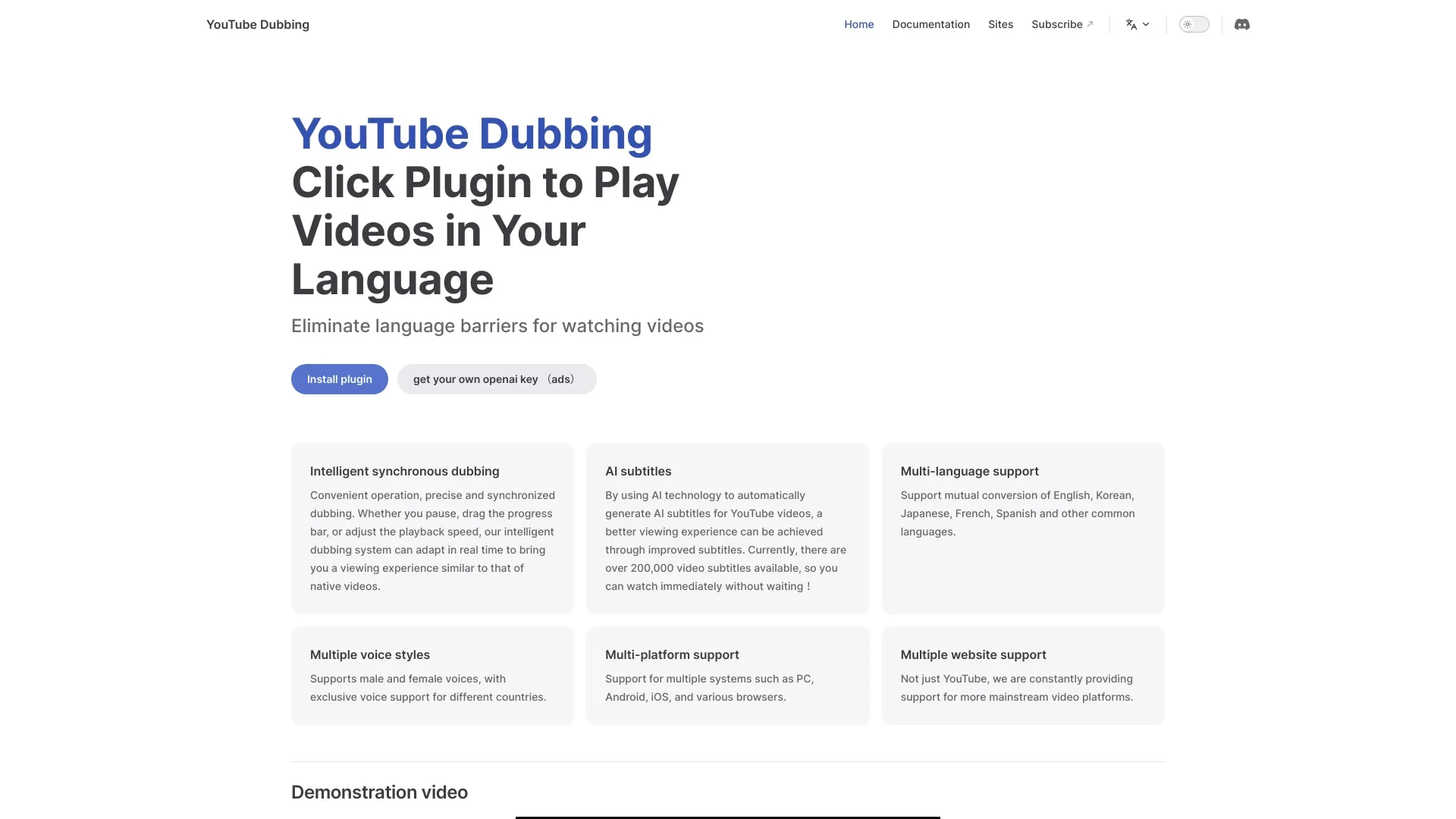
Trancy for Chrome and YouTube Chinese Dubbing both aim to reduce language barriers in video content, but they pursue different paths. Trancy for Chrome blends bilingual subtitles with AI driven learning features to support ongoing study, while YouTube Chinese Dubbing focuses on seamless real time dubbing and subtitle reading for immersive viewing. Each tool serves distinct end users, from language learners to casual multilingual viewers.
Learning languages through engaging video content
Enhancing speaking and listening abilities through real-life contexts
Translating and understanding foreign webpage text
Analyzing grammatical structures in sentences
Engaging and enjoyable learning experience
Personalized learning through content preferences
Comprehensive language support with real-life applications
Bilingual subtitles for videos
AI-enhanced word and grammar analysis
Customizable learning decks
Immersive translation for selected webpage content
Speech recognition and pronunciation aids
Enhance viewer experience
Understand content in foreign languages
Improve quality of video subtitles
Streamline video consumption without reading subtitles
Eliminates the need to focus on subtitles
Improves immersive viewing experience
Supports various languages and platforms
Intelligent synchronous dubbing
AI-generated subtitles
Support for multiple languages
Various voice styles for playback
Compatible across different platforms
| Factor | Trancy for Chrome | YouTube Chinese Dubbing |
|---|---|---|
| Ease of Use |
|
|
| Features |
|
|
| Value for Money |
|
|
| Interface Design |
|
|
| Learning Curve |
|
|
| Customization Options |
|
|
Experts suggest using Trancy for long term language acquisition by pairing bilingual subtitles with custom decks and grammar analysis, starting with short videos and gradually increasing complexity. For instant comprehension while watching foreign content, YouTube Chinese Dubbing is valuable especially with multiple languages and voice styles. Consider using both tools in tandem: enable Trancy for learning while using dubbing to confirm understanding.
Jamie Davis
Software Analyst
For learners focused on building vocabulary and grammar from real world videos Trancy for Chrome is the preferred option due to its learning deck features and AI analysis. For viewers who want effortless comprehension and fast access to translated subtitles across platforms YouTube Chinese Dubbing is the better fit. If budget and usage patterns permit many users may benefit from using both tools to cover study and viewing needs.
Trancy for Chrome operates on a freemium model with a monthly subscription that unlocks full features such as bilingual subtitles AI enhanced word and grammar analysis and customizable decks. YouTube Chinese Dubbing is offered free with a one_time billing model based on consumption, delivering dubbing and subtitles without a long term commitment. In practice, choose Trancy for sustained learning journeys and B for quick on demand viewing enhancements.
No explicit speed metrics are provided for either tool. Both rely on browser extension technology and cloud AI for real time subtitle translation and dubbing, with Trancy leveraging AI powered word and grammar analysis and Netflix YouTube integration, and YouTube Chinese Dubbing offering synchronous dubbing across platforms.
Trancy for Chrome offers a learning oriented interface with customizable decks bilingual subtitles and playback controls that support personalized study. The onboarding emphasizes turning favorite videos into learning experiences and adjusting difficulty as you progress. YouTube Chinese Dubbing provides a lean viewing enhancement with AI subtitles and multiple voice styles, making it quick to start but less focused on structured learning.
Trancy for Chrome integrates with YouTube and Netflix within a web based extension; YouTube Chinese Dubbing claims multi website support and compatibility across platforms.
Trade-offs include that Trancy is subscription based which may matter for long term usage; YouTube Chinese Dubbing focuses on viewing improvement and may lack deeper language learning scaffolds.