Sponsored by BrandGhost BrandGhost is a social media automation tool that helps content creators efficiently manage and schedule their social media... Visit now

Zemith.com versus Zesh - AI-driven SocialFi

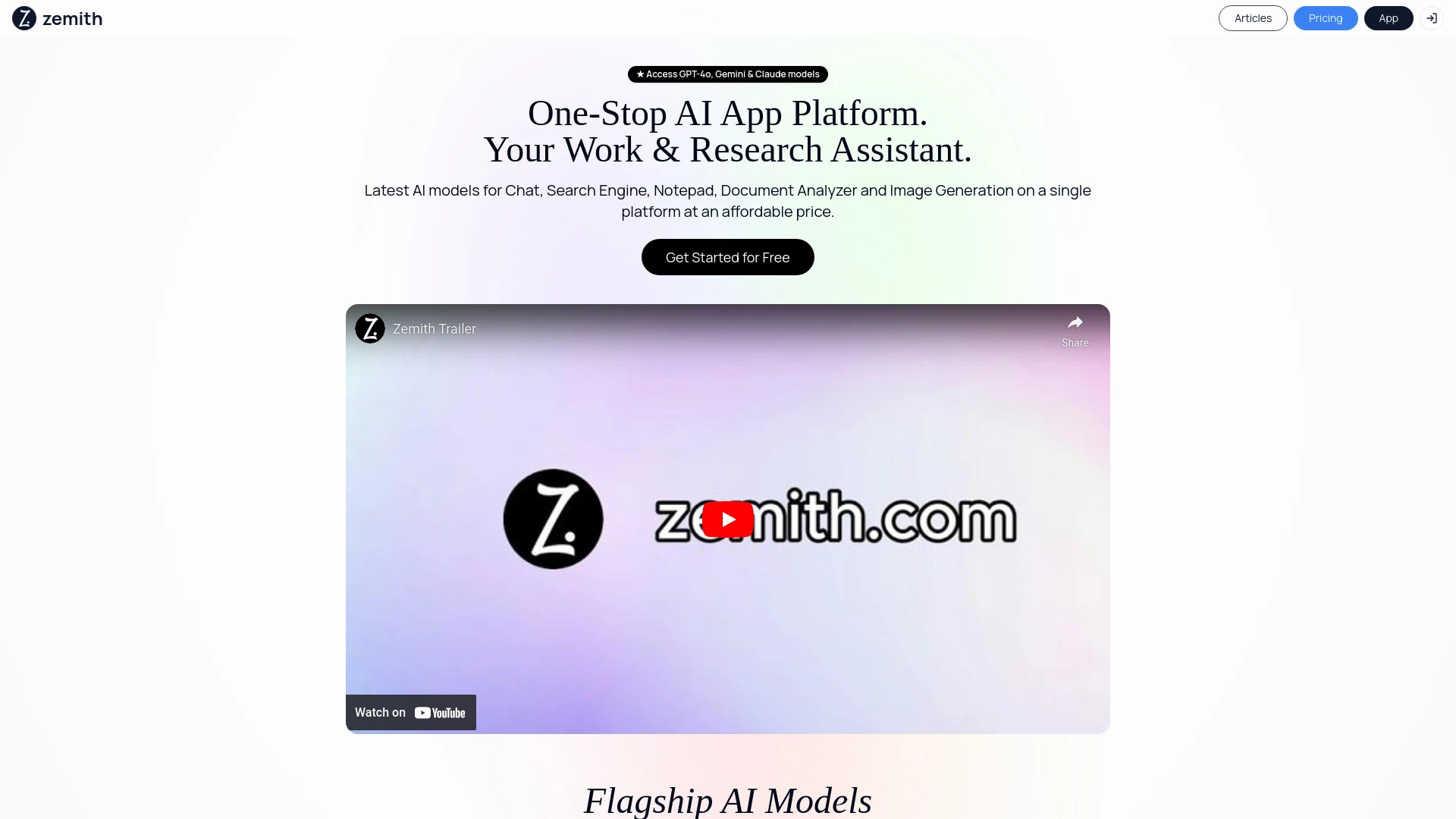
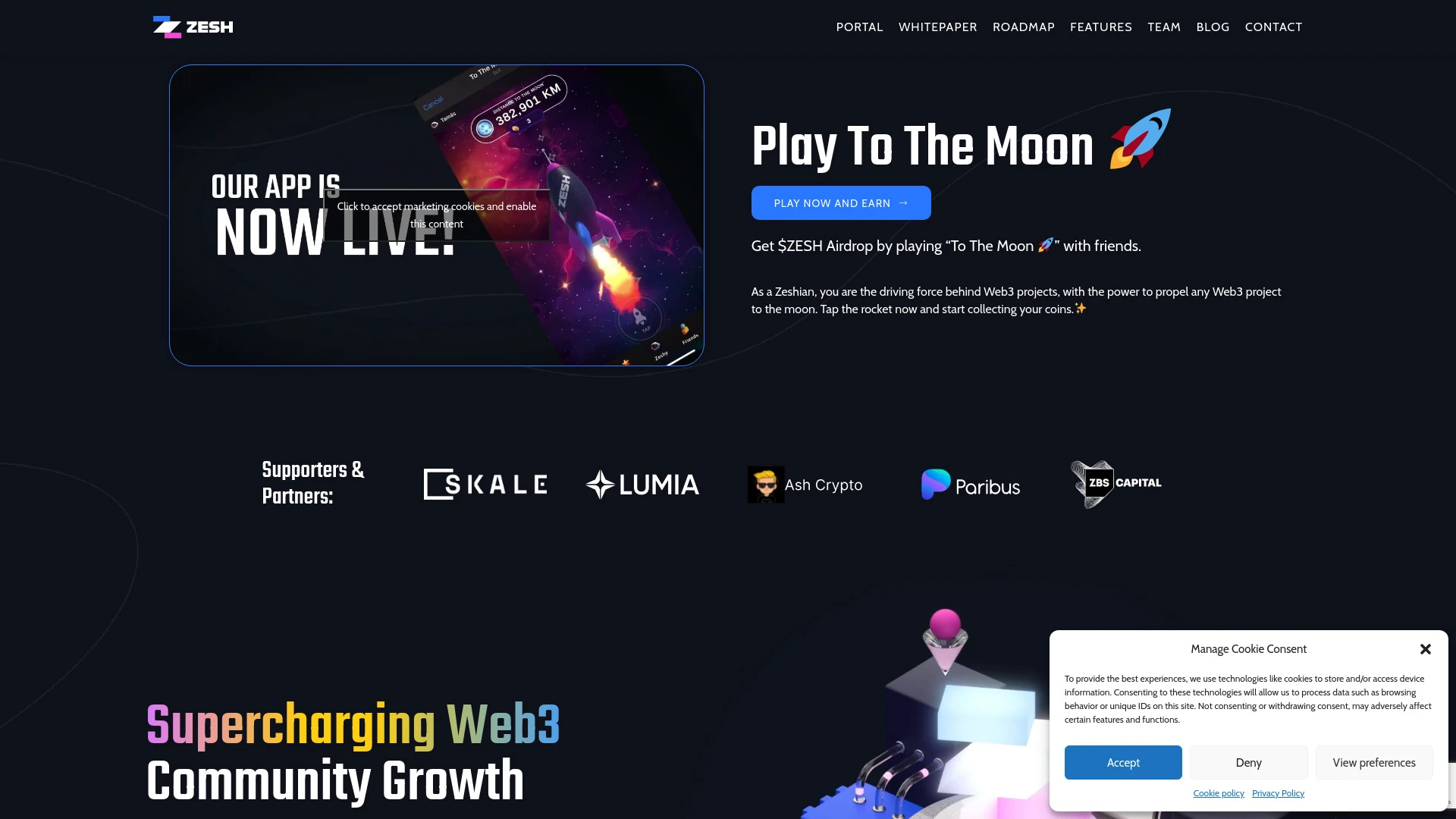
Zesh and Zemith target distinct AI use cases. Zesh focuses on Web3 communities with insights and gamified engagement to grow decentralized projects, while Zemith delivers productivity and research capabilities through multi-model AI tools. Both operate on Web platforms, but their core value propositions cater to different audiences.

Zemith.com vs Zesh - AI-driven SocialFi Overview

Last updated: May 2026

Zemith.com

0

Ideal For

    Conduct in-depth research using AI-powered document analysis

    Enhance productivity through smart note-taking

    Facilitate collaboration with advanced chat features

    Improve information retrieval with AI search capabilities

Key Strengths

    Access to multiple AI models

    User-friendly interface

    Enhanced research capabilities

Core Features

    Multi Model AI Chat

    AI Powered Search Engine

    Contextual Library

    AI Enhanced Note Taking

    Smart Visual Gallery

Ideal For

    Accelerating the growth of new Web3 projects

    Engaging users in an interactive gamified environment

    Facilitating smooth transitions from Web2 to Web3

    Assisting diverse projects on various blockchains

Key Strengths

    Enhanced community engagement

    Access to unique blockchain insights

    Flexible integration with any blockchain

Core Features

    AI-driven community insights

    Integration of zkML technology

    Ultra-gamification for enhanced engagement

    Simplified onboarding experiences

    Support for multiple blockchains

Popularity

Low 9,500 visitors
Growing popularity
Very Low Unknown number of visitors
Growing popularity

At a Glance

Zesh is the clear winner for Web3 community growth and onboarding driven engagement, thanks to its zkML insights and blockchain friendly design. Zemith is the better fit for productivity and research tasks with its multi model AI Chat and AI powered search capabilities. If your needs span both domains, adopting a dual approach or selecting the platform that aligns with your primary use case will deliver faster value.

Pricing and Subscription Plans

Zesh offers a 0.00 freemium entry with monthly billing for premium features, making it easy for new Web3 projects to explore AI driven community insights and gamification. Zemith charges 12.00 freemium with monthly billing, reflecting a more feature rich productivity and research toolkit. Both rely on subscription models, with Zesh leaning toward onboarding and community growth and Zemith toward efficiency and analysis. The pricing structure supports scalable use as needs expand.

Performance Metrics

No explicit speed or reliability metrics are provided for either tool. Zesh relies on zkML and blockchain-agnostic components to deliver scalable community insights, while Zemith integrates multiple AI models such as GPT, Claude, and Gemini to support diverse tasks. Together these architectures indicate a design focused on modularity and cloud-based scalability, even though precise benchmarks are not disclosed here.

User Experience

Zesh emphasizes onboarding from Web2 and uses ultra-gamification to boost engagement, which can accelerate adoption in Web3 projects. Zemith offers a familiar productivity workflow with multi model AI Chat, AI powered search, and note taking, aimed at general research and collaboration. Both platforms are web-based, and the learning curve will vary with the user's background in Web3 or AI-assisted productivity. Onboarding and tutorials will be key to unlocking value quickly.

Integrations and Compatibility

Zesh explicitly supports multiple blockchains and remains blockchain agnostic, enabling broad compatibility. Zemith exposes access to major AI models such as GPT, Claude, and Gemini, enabling cross model workflows; no third party app integrations listed.

Limitations and Drawbacks

Zesh's Web3 focus may require some Web2 or non blockchain teams to adapt to gamified mechanics. Zemith's breadth across models and tools can introduce perceived complexity for users seeking a single focused task.

Frequently Asked Questions

What is the main difference between Zemith.com and Zesh - AI-driven SocialFi?
The key difference between Zemith.com and Zesh - AI-driven SocialFi lies in their core use cases, pricing models, and feature depth. Zemith.com typically focuses on specific workflows, while Zesh - AI-driven SocialFi offers broader capabilities suitable for different teams and scenarios.
Which is better for teams: Zemith.com or Zesh - AI-driven SocialFi?
Zesh - AI-driven SocialFi is often a better fit for growing teams that need collaboration, governance, and integrations, while Zemith.com can be ideal for individuals or smaller teams who want a simpler, more focused solution.
Is Zemith.com more affordable than Zesh - AI-driven SocialFi?
Pricing depends on your usage and plan tiers. Zemith.com may offer a lower entry price, while Zesh - AI-driven SocialFi can provide more value at scale with advanced features included in higher-tier plans.
Can I use both Zemith.com and Zesh - AI-driven SocialFi together?
Yes, many teams combine both tools in their workflows to cover different use cases. Always review integrations and overlapping features to avoid paying twice for similar functionality.

Related Comparisons