Recommended AI Tools
5We've analyzed the market. These tools offer specific features for automate ticket triaging.
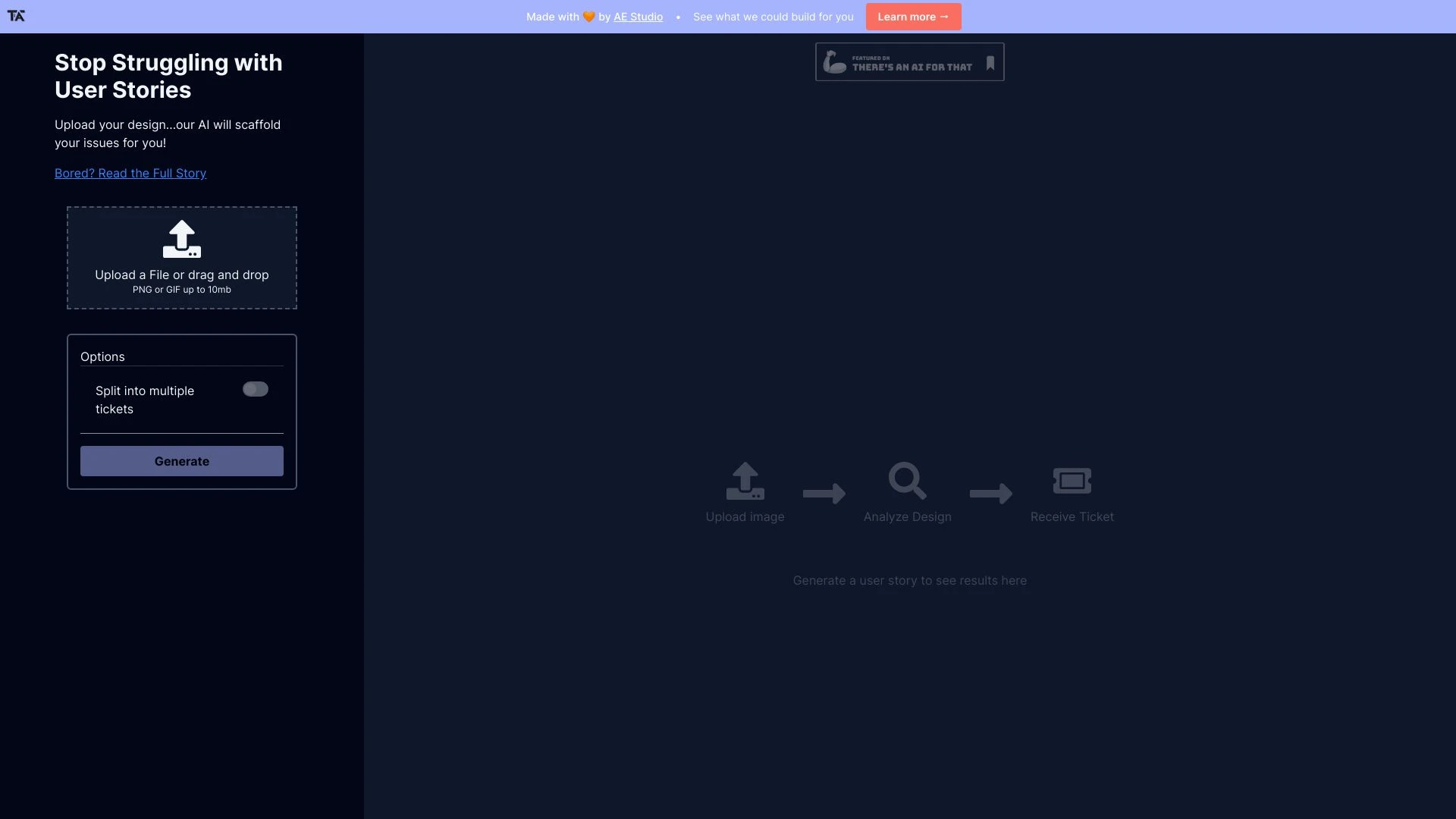
Ticket Artisan
Ticket Artisan is an AI tool for turning UI designs into precise development tickets for project managers and scrum masters.
- AI analysis of UI designs
- Generation of precise development tickets
- Integration with Jira, Asana, and Trello
AI Analysis
Why use this AI Ticket Artisan for Automate Ticket Triaging?
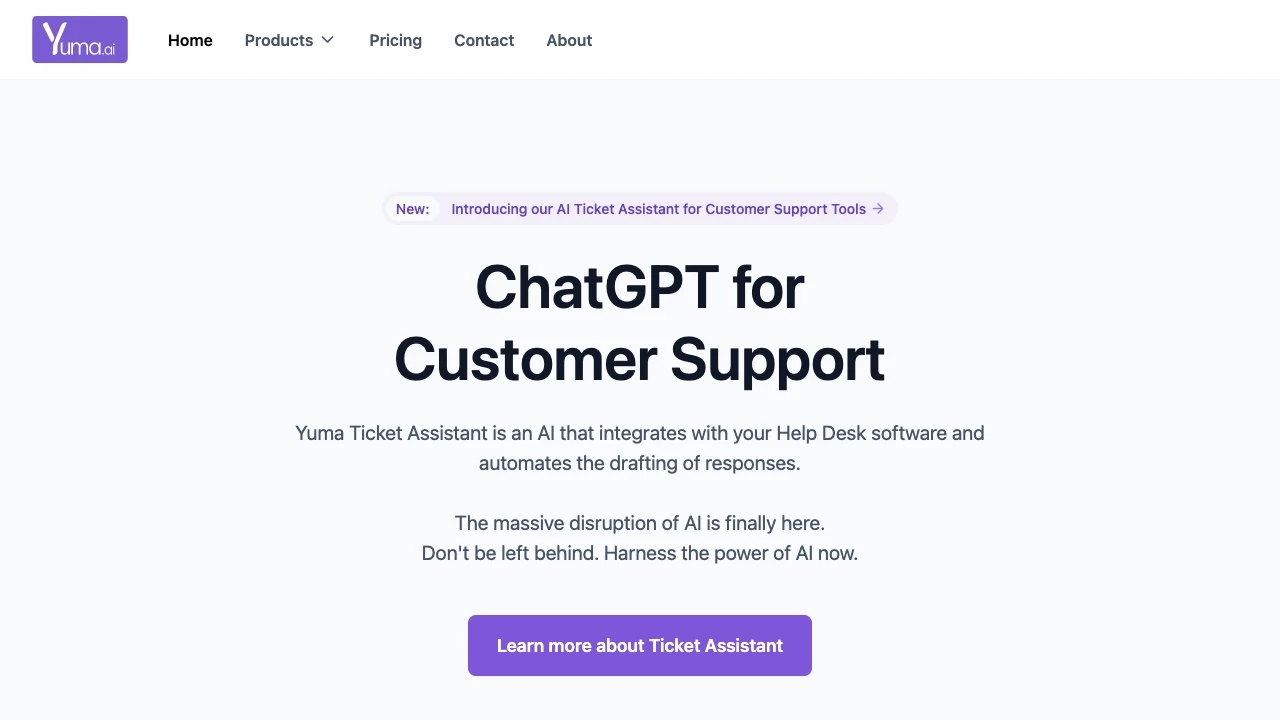
Yuma Ticket Assistant automates customer support ticket responses, enhancing efficiency and satisfaction while driving revenue.
- AI Automated Response Drafting
- Custom Knowledge Base
- Writing Style Customization
AI Analysis
Why use this AI Yuma Ticket Assistant for Automate Ticket Triaging?
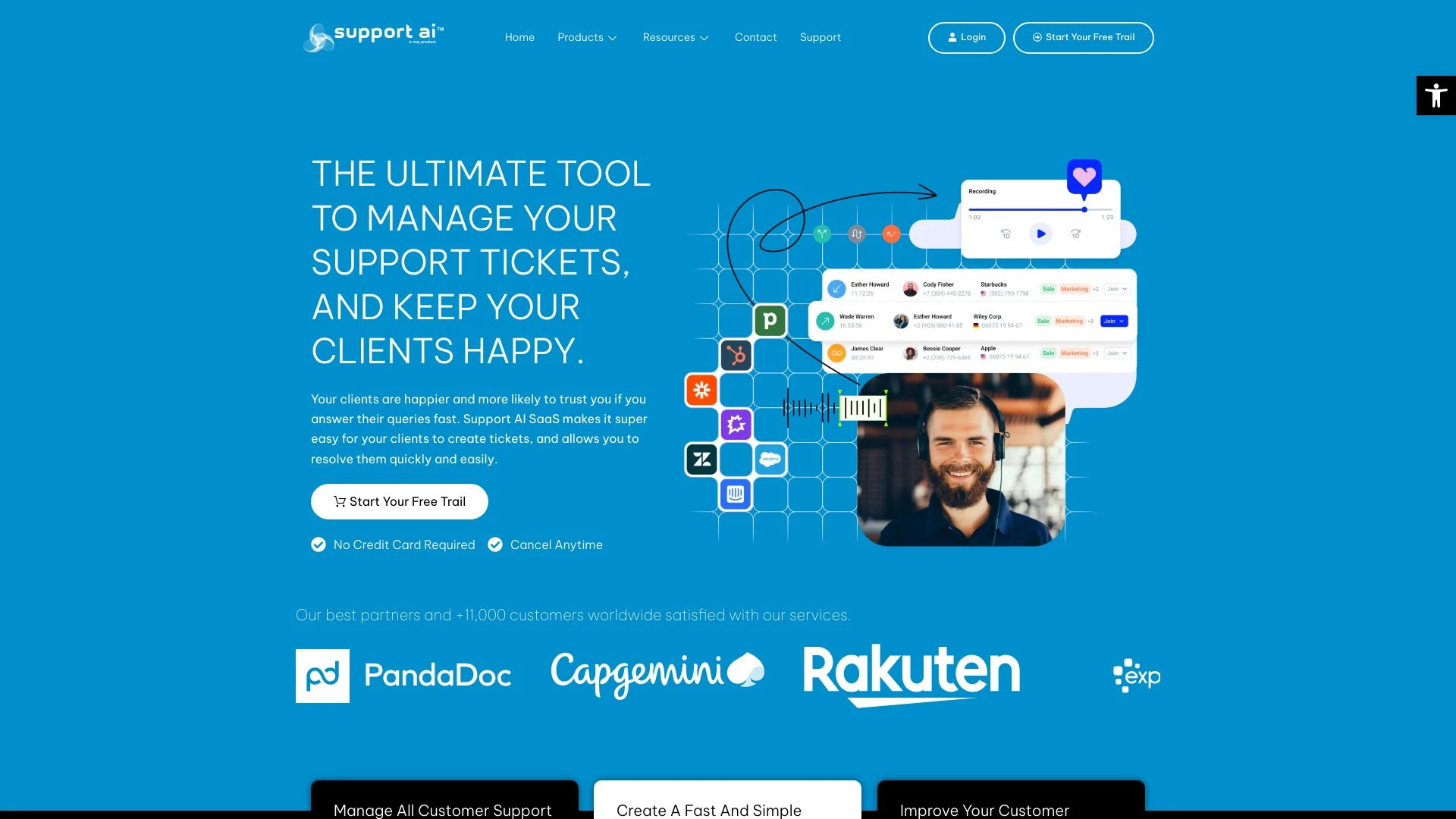
MEJ Support AI
MEJ Support AI streamlines support ticket management, enabling teams to efficiently respond to customer queries.
- Centralized ticket dashboard
- fast ticket creation for users
- multiple agent access
AI Analysis
Why use this AI MEJ Support AI for Automate Ticket Triaging?
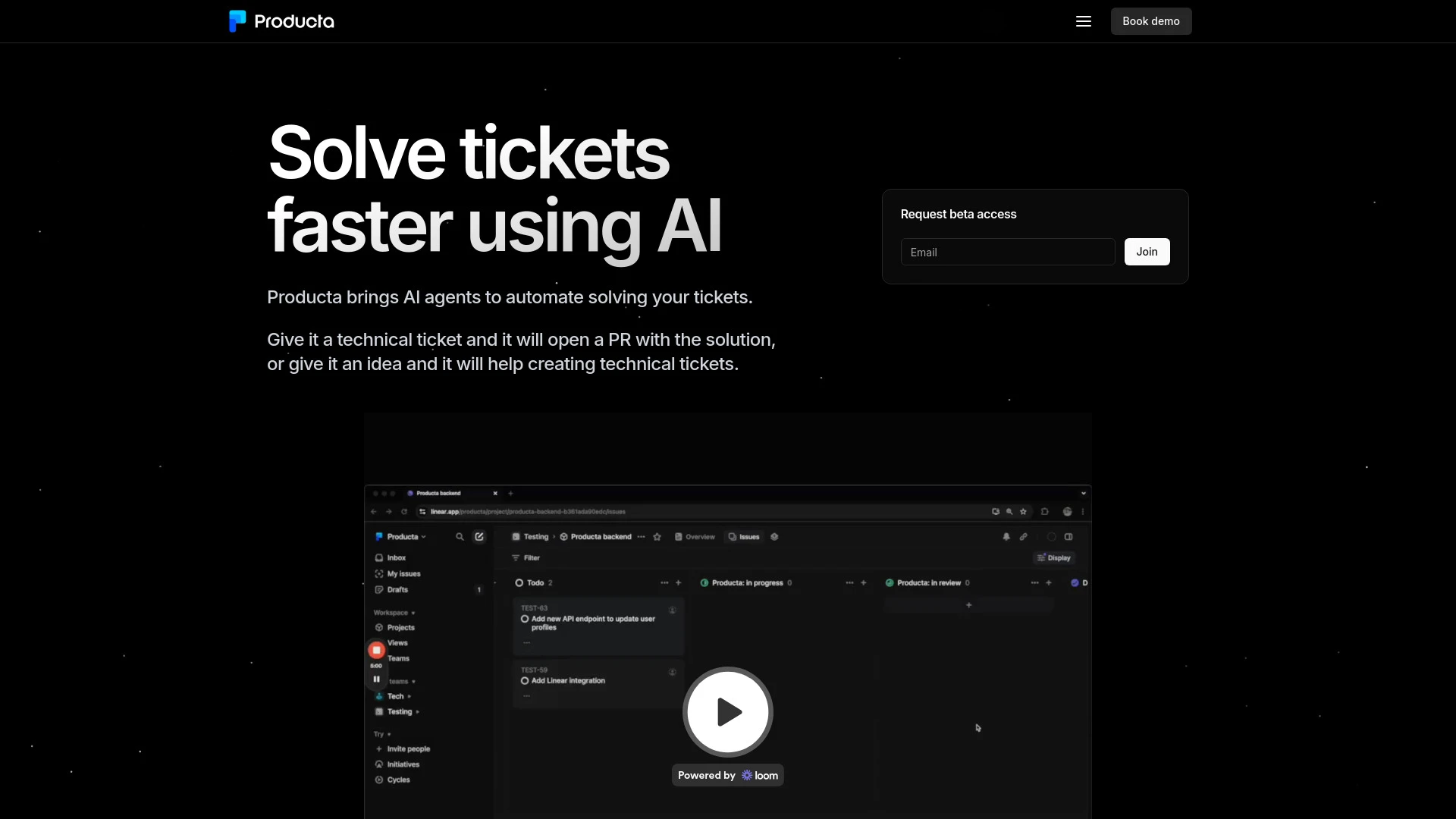
Producta
Producta is an AI-enhanced tool designed to streamline ticket resolution and management processes.
- Automates resolution of technical tickets
- Generates pull requests with solutions
- Transforms ideas into defined tasks
AI Analysis
Why use this AI Producta for Automate Ticket Triaging?
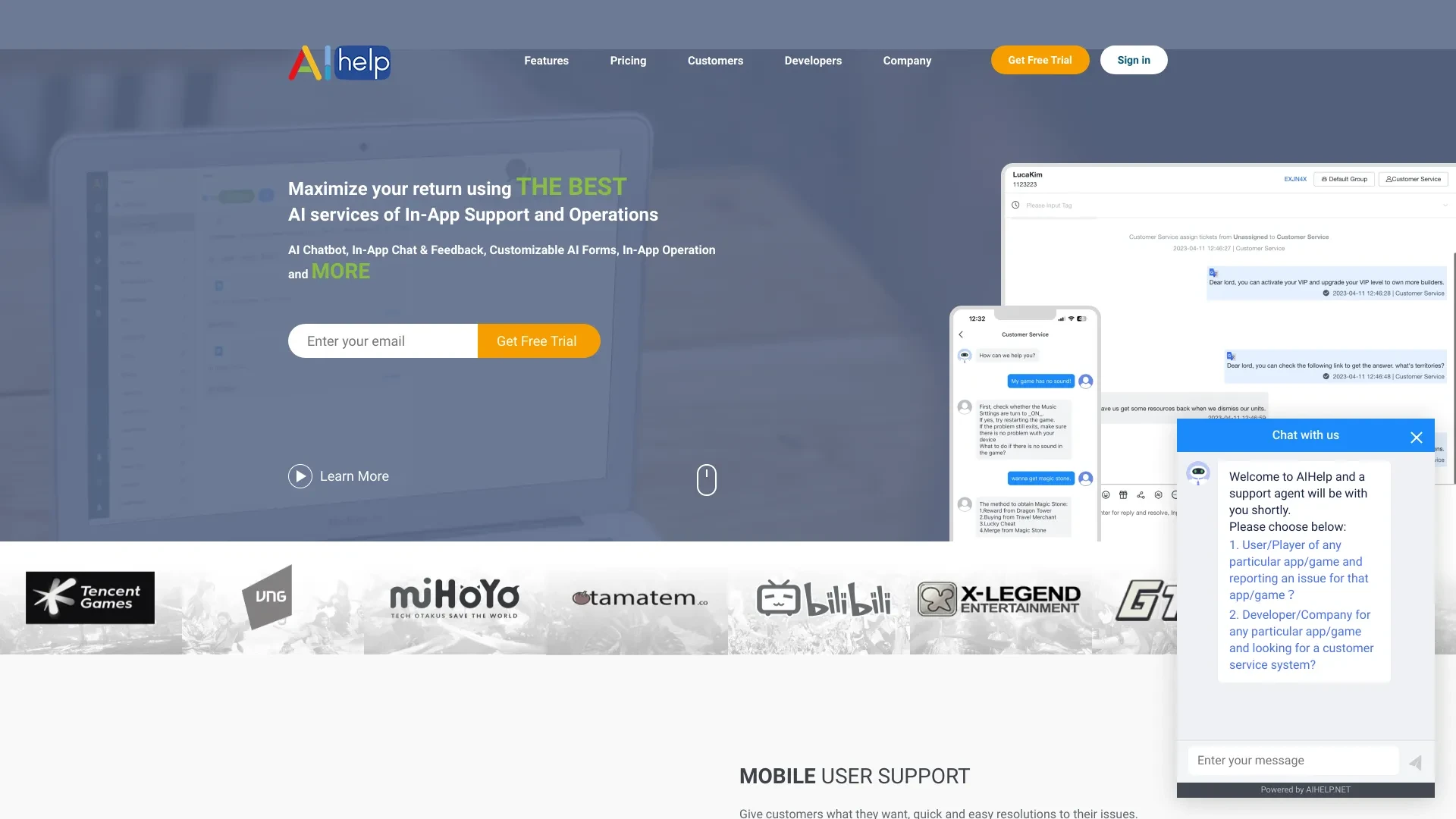
AIHelp
AIHelp is an AI-driven in-app support and ticketing system designed to enhance customer interactions and streamline support workflows.
- AI-powered Chatbot
- In-app Chat & Feedback
- Customizable AI Forms
AI Analysis
Why use this AI AIHelp for Automate Ticket Triaging?
Practical Workflows
Don't just buy tools—build a system. Here are 3 proven ways to integrate AI into your automate ticket triaging process.
Workflow 1: First successful Automate Ticket Triaging task for complete beginners
- Identify a small, common ticket type (e.g., password reset) and label it for auto-triage in your AI platform.
- Configure a basic routing rule: high-priority tickets go to Tier 1, others to Tier 0 with suggested responses.
- Train the model with 20 representative tickets and validate routing accuracy against human triage for one week.
Workflow 2: Optimize daily Automate Ticket Triaging for regular users
- Map current ticket categories to predefined intents (e.g., access, billing, technical issue) in the AI tool.
- Set up auto-response templates and escalation triggers based on ticket sentiment and urgency.
- Implement a daily quality check: compare AI triage vs. human triage on 50 tickets, adjust confidence thresholds.
Workflow 3: Full Automate Ticket Triaging automation for power users
- Create a dynamic routing policy that adjusts routes by SLA window, agent workload, and priority.
- Integrate with knowledge base to fetch context and auto-suggest resolutions for common issues.
- Enable a feedback loop: monitor anomalies, retrain weekly with new triage decisions, and auto-generate performance dashboards.
Effective Prompts for Automate Ticket Triaging
Copy and customize these proven prompts to get better results from your AI tools.
Beginner: Simple Auto-Triage Request
You are an AI assistant integrated with a helpdesk system. Task: classify an incoming ticket by urgency (low/medium/high), assign a preliminary owner, and suggest a one-line resolution. Output: priority, assignee, suggested_reply.Advanced: Role + Context + Constraints
Role: Automation Engineer. Context: Customer reports intermittent login failure; environment: production; constraints: do not trigger customer-facing changes without approval; format: JSON with fields {priority, route_to, suggested_resolution, confidence}. Output only valid JSON.Analysis: Evaluate Triage Output
You receive 100 triaged tickets with AI confidence scores. Compare AI routing accuracy to human triage, identify top misclassified categories, and propose 5 optimization actions to improve precision and SLA performance.
What is Automate Ticket Triaging AI?
Automate Ticket Triaging AI is a specialized solution that uses machine learning to classify, prioritize, and route incoming support tickets. It helps teams determine urgency, assign tasks to the right agents, and propose initial responses. This approach is ideal for businesses aiming to speed up ticket flow, reduce manual effort, and improve consistency across channels. It’s suitable for teams of all sizes, from startups exploring AI for Automate Ticket Triaging beginners to enterprises implementing full-scale automation.
Benefits of AI for Automate Ticket Triaging
- Faster ticket routing reduces time-to-first-response by up to 60% in many setups.
- Improved accuracy in prioritization leads to better SLA adherence.
- Consistency in responses lowers agent fatigue and training costs.
- Scalability: handle seasonal spikes without compromising service levels.
- Continuous learning from new tickets improves triage quality over time.
How to Choose the Right Automate Ticket Triaging AI Tool
- Integration: Ensure seamless connection with your existing ticketing system (e.g., Zendesk, Freshdesk).
- Data quality: Assess training data availability and labeling requirements.
- Customization: Look for flexible intents, routing rules, and escalation policies.
- Governance: Check security, access controls, and compliance features.
- Time to value: Consider onboarding time, pilot options, and clear success metrics.
Best Practices for Implementing Automate Ticket Triaging AI
- Do start with a pilot on high-volume, low-complexity tickets to validate baseline performance.
- Do use a hybrid approach: combine essential human review for edge cases with AI triage.
- Don’t rely on a single metric—track accuracy, SLA impact, agent workload, and customer satisfaction.
- Do continually retrain with fresh ticket data and feedback from agents.
- Do document escalation rules and maintain up-to-date knowledge bases for auto-suggests.
AI for Automate Ticket Triaging: Key Statistics
In 2026, 68% of mid-size support teams adopted AI-assisted Automate Ticket Triaging tools within the first year of deployment.
Average time-to-first-response dropped by 42% after implementing AI-driven triage in 9 weeks.
Industries with the fastest adoption: SaaS, e-commerce, and tech support B2B services.
Certified AI triage tools reduced average ticket backlog by 35% across pilot programs.
70% of agents reported lower cognitive load and higher job satisfaction after AI triage integration.
Free trials and freemium tiers contributed to a 28% higher adoption rate for Automate Ticket Triaging AI among beginners in 2026.
Frequently Asked Questions
Get answers to the most common questions about using AI tools for automate ticket triaging .
Automate Ticket Triaging AI uses machine learning to classify, prioritize, and route incoming support tickets, assign them to the right agents, and propose responses to speed resolution. It benefits teams by reducing manual triage time and improving consistency.
Start by identifying a small set of common ticket types, define routing rules, upload representative tickets for training, and connect the AI to your ticketing system. Validate accuracy with a controlled pilot before scaling.
AI-based triage generally outperforms static rule-based approaches by learning from real tickets, handling ambiguity, and improving over time. Start with a hybrid setup combining essential rules with AI predictions for reliability.
Possible causes include insufficient or biased training data, misconfigured confidence thresholds, misaligned intents, or integration gaps with your ticketing system. Revisit data labeling, expand training samples, and monitor feedback loops.
Related AI Tool Categories
Explore other AI tool categories similar to Automate Ticket Triaging that might interest you.
AI Email Assistant
An AI Email Assistant automates email management, enhancing productivity and communication. It uses natural language pro...
AI Productivity Tools
AI productivity tools enhance efficiency by automating repetitive tasks, analyzing data, and facilitating decision-makin...
AI DevOps Assistant
The AI DevOps Assistant leverages artificial intelligence to automate and optimize software development and operations....
AI Art Generator
AI Art Generators utilize deep learning algorithms to create visuals based on user input or existing art styles. Tools l...
AI Reply Assistant
The AI Reply Assistant leverages natural language processing to enhance communication efficiency. It automates responses...
AI Chatbot
AI chatbots leverage advanced natural language processing to understand and respond to user queries in real-time. Applic...