Sponsored by BrandGhost BrandGhost is a social media automation tool that helps content creators efficiently manage and schedule their social media... Visit now

AirOps versus UbiOps

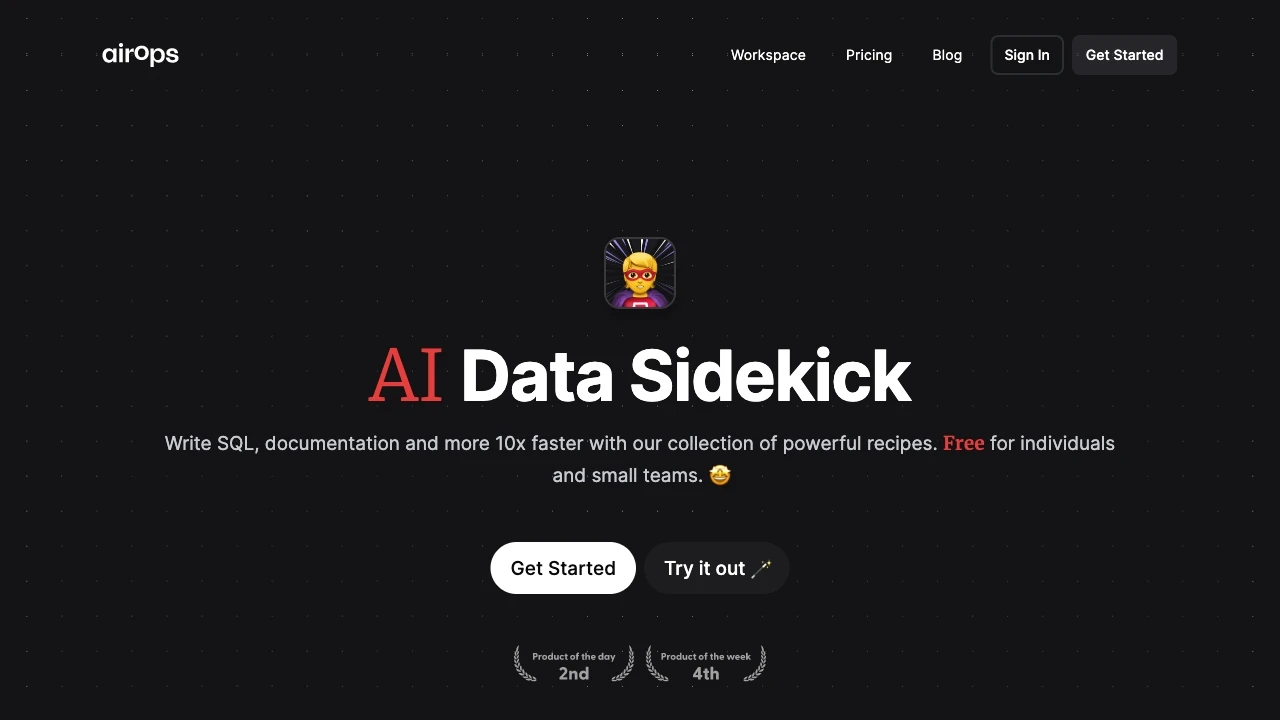
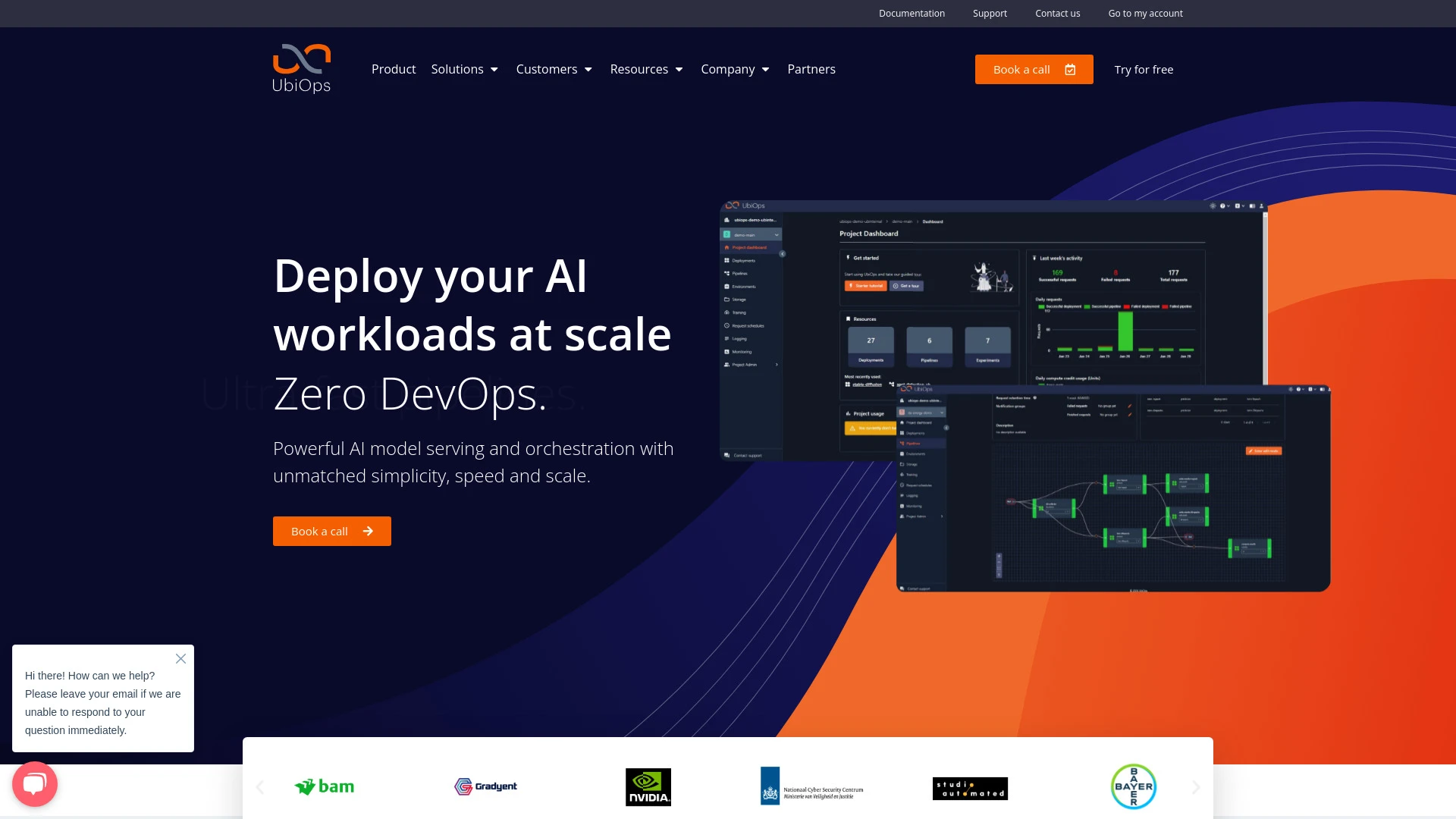
UbiOps and AirOps are web based platforms that enable teams to build deploy and manage AI applications with orchestration and scalability. UbiOps concentrates on secure microservices for AI and ML workloads with seamless data science workflow integration, while AirOps emphasizes rapid AI app development with built in LM integration and workflow automation. Both aim to shorten time to production.

AirOps vs UbiOps Overview

Last updated: May 2026

AirOps

0

Ideal For

    developing Q&A chatbots

    generating high-quality, AI-written content

    text classification and analysis

    converting media files into structured reports

Key Strengths

    streamlines AI app development

    integrates seamlessly with leading AI models

    supports scalability for various applications

Core Features

    AI app creation through AirOps Studio

    integration with leading language models like GPT-4 and Claude 2

    automation of workflows and deployment options

    batch operations for scaling AI processes

    NLP-based data analysis and content generation

UbiOps

0

Ideal For

    Developing AI products for startups

    Enabling reliable ML services

    Streamlining AI deployments for large organizations

    Facilitating rapid prototyping of AI applications

Key Strengths

    Eliminates costly infrastructure management

    Enhances deployment speed for AI models

    Provides secure microservices for AI workloads

Core Features

    Fast deployment of AI/ML workloads

    Scalable AI model serving

    Secure integration into existing workflows

    Advanced orchestration capabilities

    Elimination of infrastructure management worries

Popularity

Very High 129,100 visitors
Growing popularity
Medium 28,000 visitors
Growing popularity

Decision Matrix

Factor AirOps UbiOps
Ease of Use
7.8/10
7.5/10
Features
8.5/10
8.0/10
Value for Money
7.0/10
8.0/10
Interface Design
8.2/10
7.0/10
Learning Curve
7.5/10
7.5/10
Customization Options
8.0/10
8.0/10

Quick Decision Guide

Choose AirOps if:
  • You want seamless integration with your workflow tools.
  • You aim for enhanced efficiency in data management tasks.
  • You value advanced analytics for informed decision-making.
  • You look for user-friendly interfaces and easy navigation.
  • You seek robust support for team collaboration and sharing.
Choose UbiOps if:
  • You want seamless deployment of ML models in production
  • You aim for scalable and efficient resource management
  • You value real-time monitoring and analytics of applications
  • You look for user-friendly interface for quick setup
  • You seek robust support for multi-cloud environments

What Our Experts Say

Use UbiOps when your priority is secure, scalable AI workloads that slot into established data science pipelines and require minimal infra management. Opt for AirOps when you need to build and test AI apps quickly, leveraging advanced LM models and customizable templates with built in monitoring. For implementation, map your data sources and microservices in UbiOps first, then explore AirOps Studio templates to accelerate proofs of concept. Consider a hybrid approach if you need both secure deployment and rapid app development.
JD

Jamie Davis

Software Analyst

At a Glance

For teams prioritizing secure AI production with seamless integration into existing pipelines, UbiOps emerges as the stronger choice. For teams focused on rapid AI app development, LM integration, and customizable workflows, AirOps is the better fit. If you need both secure infrastructure and fast app iteration, consider a phased approach that starts with UbiOps for deployment and adds AirOps for experimentation and workflow automation.

Pricing and Subscription Plans

Both tools list a zero price point and a monthly subscription model, signaling accessible entry while keeping ongoing value. UbiOps positions itself around eliminating infrastructure management and delivering fast deployment and secure AI model serving. AirOps highlights LM integrations GPT-4 and Claude 2, plus customizable templates and performance evaluation to speed development. Overall, choose UbiOps for secure scalable deployments, or AirOps for rapid app creation with advanced LM tooling.

Performance Metrics

No published speed metrics are provided. Both platforms emphasize scalability and robust orchestration: UbiOps supports scalable AI model serving and secure integration, while AirOps enables batch operations and performance evaluation. Architectural stability appears prioritized through managed infra and LM integration, but exact throughput figures are not disclosed.

User Experience

UbiOps markets itself as integrating securely into existing data science workbenches, with a focus on rapid deployment and straightforward orchestration that reduces infra burdens. AirOps offers AirOps Studio for app creation, templates for quick starts, and versioning with performance evaluation, which can shorten onboarding for teams new to AI workflows. The learning curve varies by focus: UbiOps emphasizes deployment and ops, AirOps emphasizes app design and LM driven workflows. Both deliver web based interfaces designed for collaboration.

Integrations and Compatibility

UbiOps emphasizes secure integration into existing data science workflows and tools. AirOps integrates with leading language models such as GPT-4 and Claude 2 and supports template driven development.

Limitations and Drawbacks

Both platforms pack powerful capabilities but teams may face a learning curve aligning with a given platform approach to AI DevOps. Adoption may depend on ecosystem maturity and internal alignment with either secure microservice deployments or LM driven app development.

Frequently Asked Questions

What is the main difference between AirOps and UbiOps?
The key difference between AirOps and UbiOps lies in their core use cases, pricing models, and feature depth. AirOps typically focuses on specific workflows, while UbiOps offers broader capabilities suitable for different teams and scenarios.
Which is better for teams: AirOps or UbiOps?
UbiOps is often a better fit for growing teams that need collaboration, governance, and integrations, while AirOps can be ideal for individuals or smaller teams who want a simpler, more focused solution.
Is AirOps more affordable than UbiOps?
Pricing depends on your usage and plan tiers. AirOps may offer a lower entry price, while UbiOps can provide more value at scale with advanced features included in higher-tier plans.
Can I use both AirOps and UbiOps together?
Yes, many teams combine both tools in their workflows to cover different use cases. Always review integrations and overlapping features to avoid paying twice for similar functionality.

Related Comparisons