Herramientas de IA recomendadas
5Hemos analizado el mercado. Estas herramientas ofrecen características específicas para analizar sentimiento del cliente.
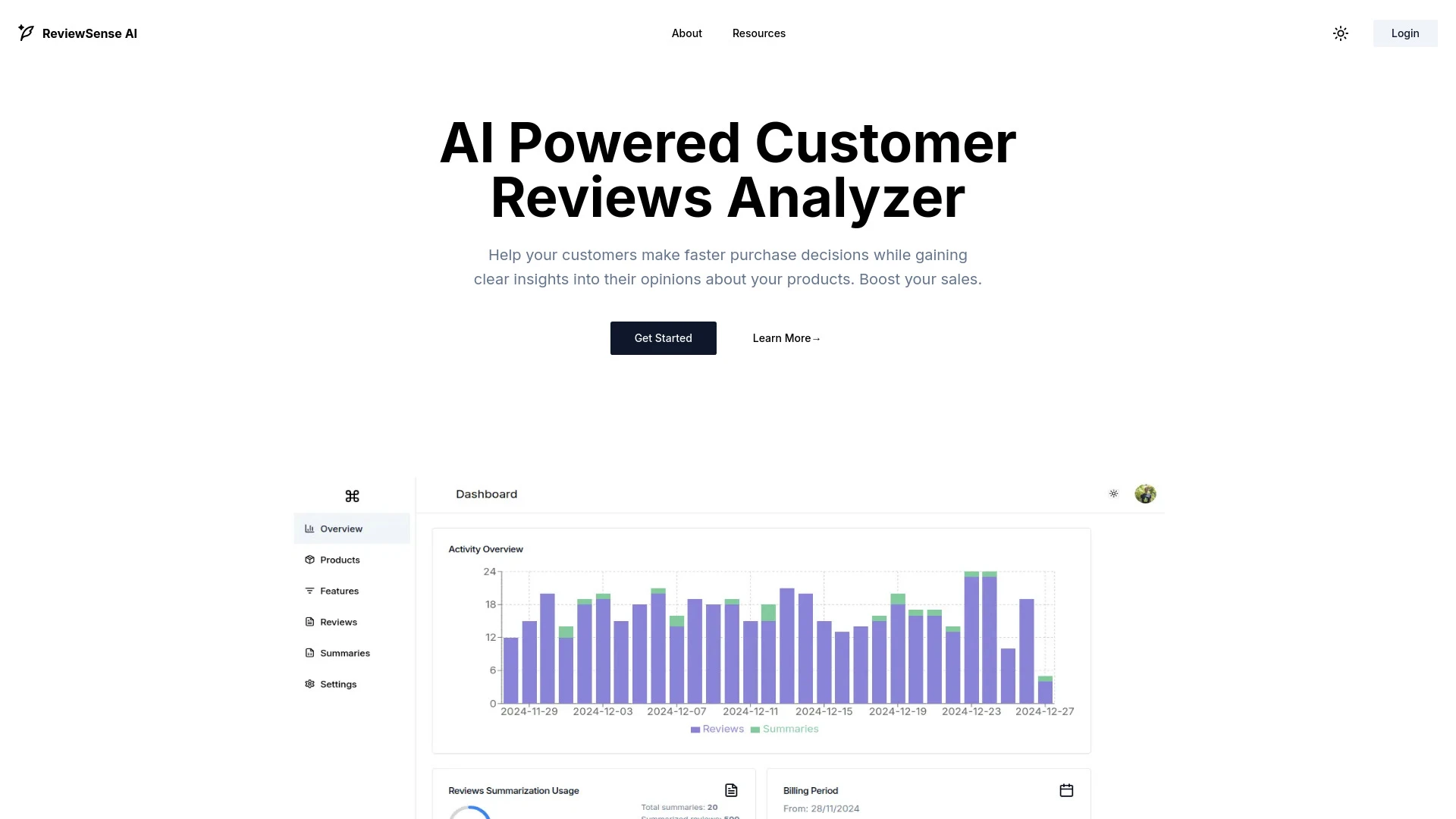
ReviewSense AI
ReviewSense AI analiza reseñas de clientes para aumentar ventas a través de comprensión efectiva del sentimiento.
- Análisis de reseñas de clientes
- Análisis de sentimientos
- Base de conocimiento dinámica
Análisis de IA
Por qué usar esta IA ReviewSense AI para Analizar Sentimiento del Cliente?
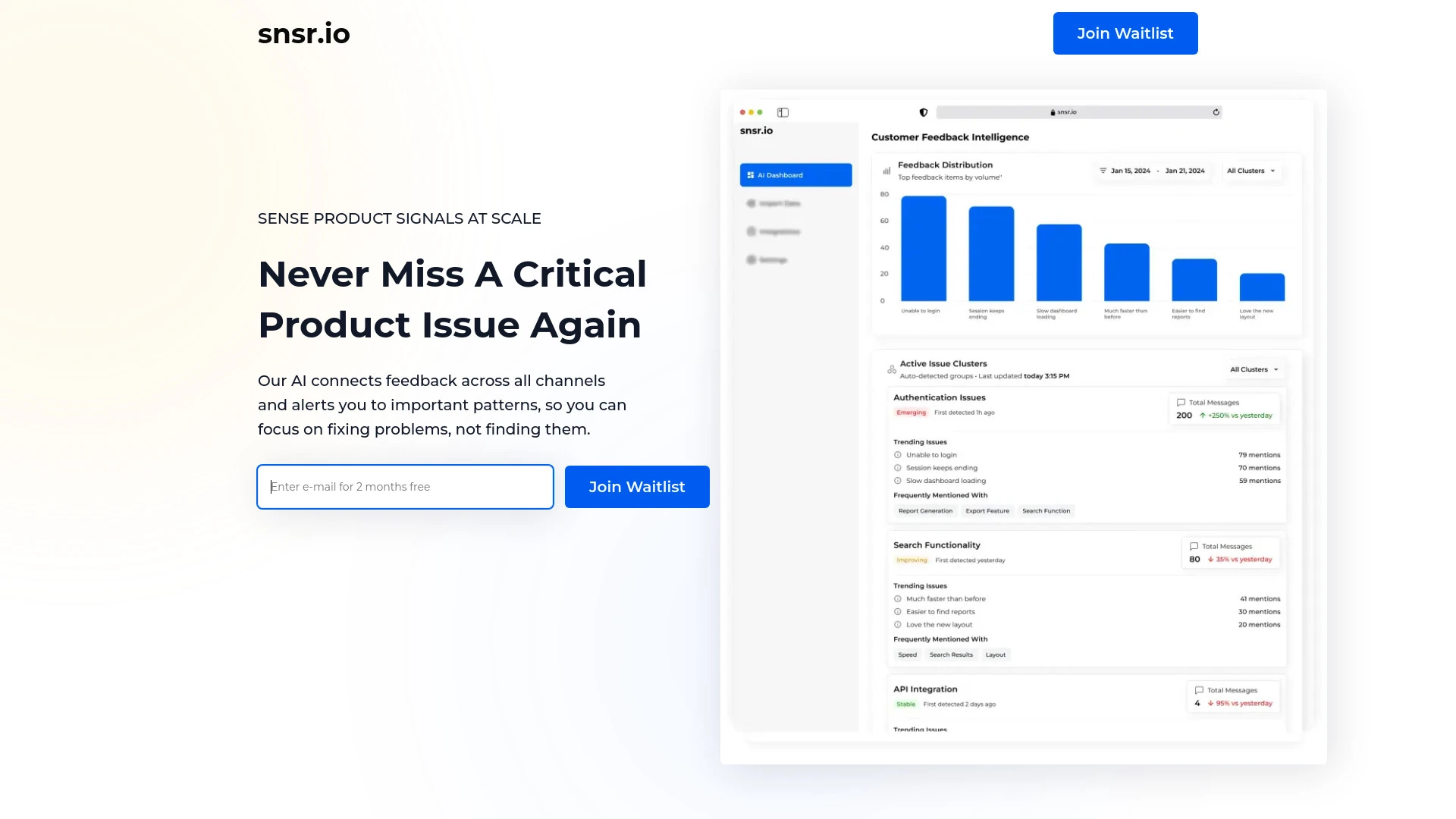
snsr.io
herramienta de IA para analizar comentarios de clientes para priorizar hojas de ruta de productos basadas en conocimientos de usuarios
- Clasificación automática de retroalimentación
- Asignación de prioridades impulsada por IA
- Generación de información sobre tendencias
Análisis de IA
Por qué usar esta IA snsr.io para Analizar Sentimiento del Cliente?
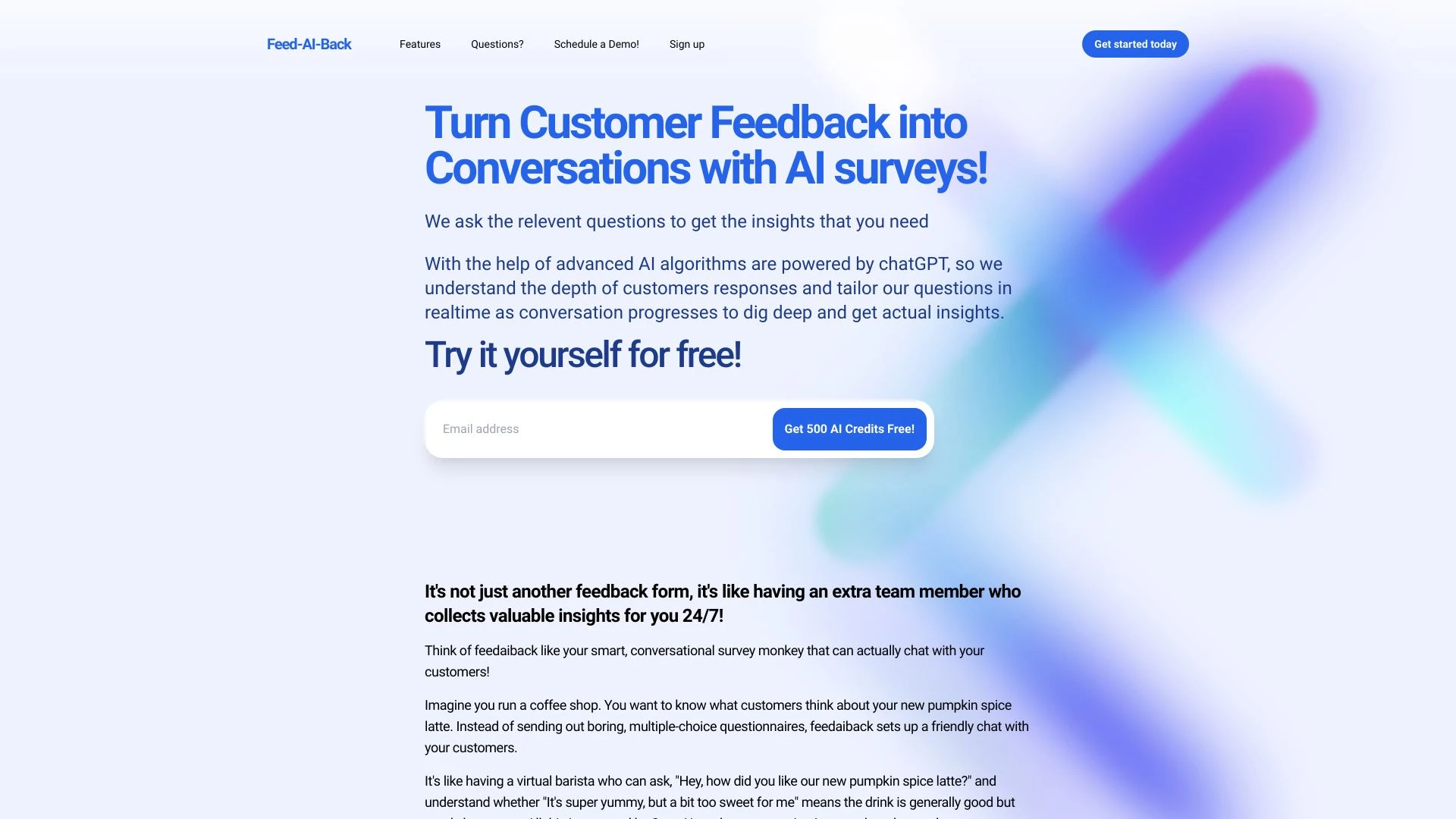
FeedAIback
Transformar la retroalimentación del cliente en conversaciones atractivas con encuestas impulsadas por IA.
- formularios de retroalimentación impulsados por IA
- respuestas en tiempo real
- preguntas personalizadas
Análisis de IA
Por qué usar esta IA FeedAIback para Analizar Sentimiento del Cliente?
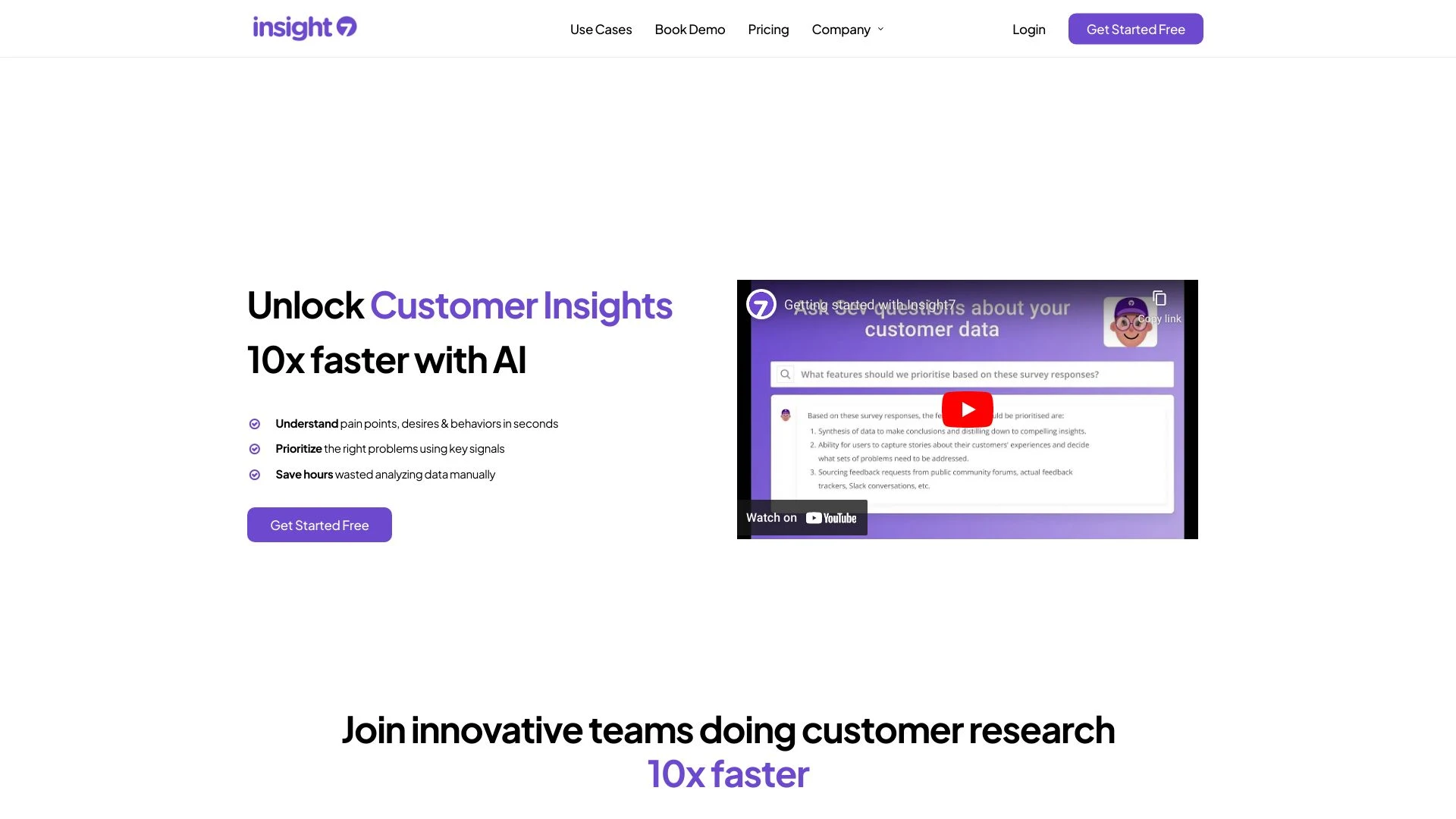
Insight7
Insight7 es una plataforma impulsada por IA diseñada para optimizar el análisis de datos de clientes y descubrir información rápidamente.
- Extracción de temas impulsada por IA
- Visualización de panel de control interactivo
- Integración con canales de comunicación
Análisis de IA
Por qué usar esta IA Insight7 para Analizar Sentimiento del Cliente?
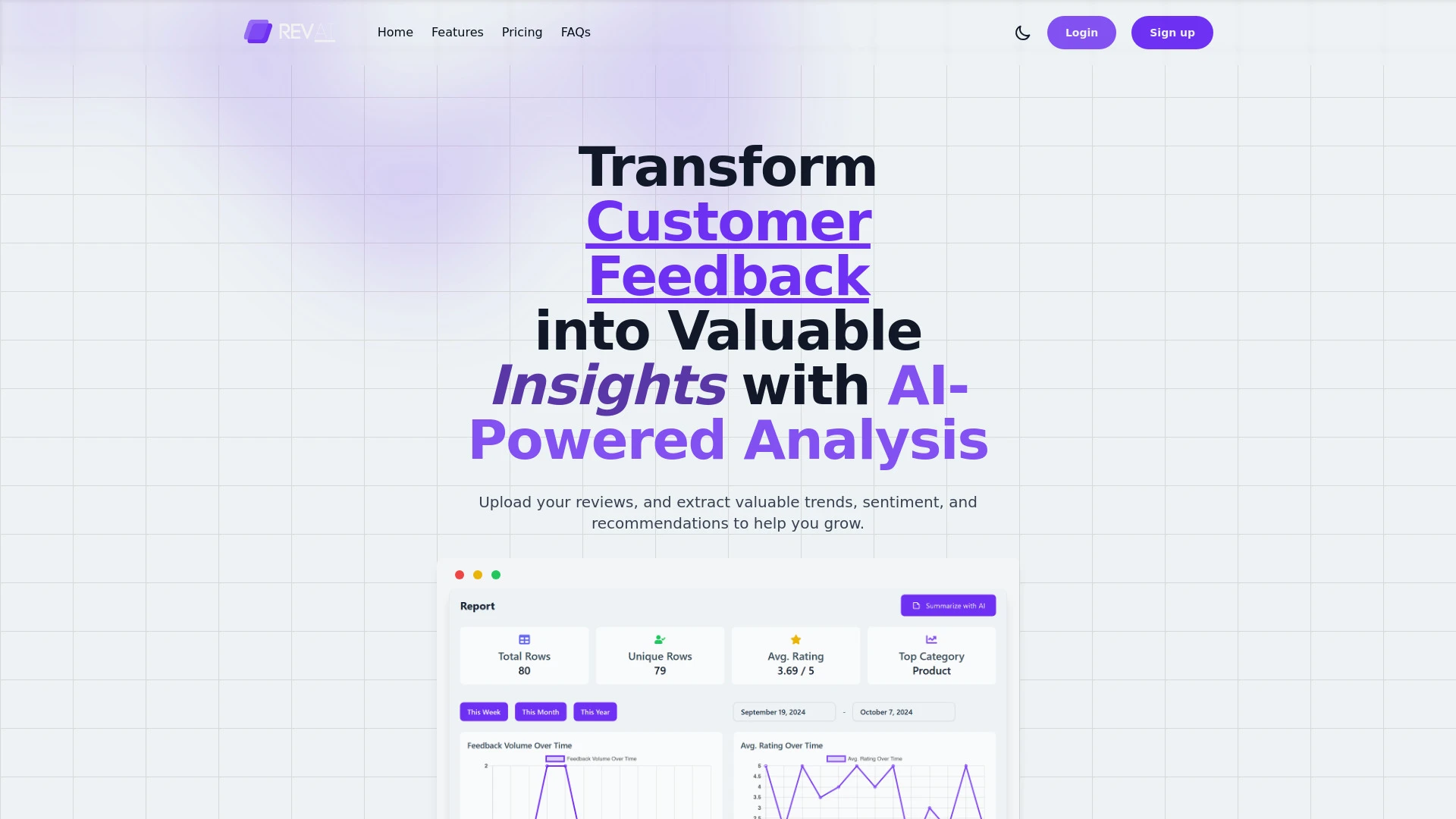
RevAI
RevAI aprovecha la tecnología de IA para analizar reseñas de clientes, proporcionando información y tendencias accionables para mejorar las estrategia...
- AI-Powered Insights
- Análisis de Sentimiento
- Identificación de Tendencias
Análisis de IA
Por qué usar esta IA RevAI para Analizar Sentimiento del Cliente?
Flujos de trabajo prácticos
No solo compres herramientas—construye un sistema. Aquí están 3 maneras probadas de integrar la IA en tu analizar sentimiento del cliente proceso.
Workflow 1 – First successful Analyze Customer Sentiment task for Complete beginner
- Identify a focused feedback source (e.g., product reviews) and define sentiment metrics (positive/negative/neutral, intensity).
- Import 50–100 sample comments into your chosen Analyze Customer Sentiment AI tool and configure language, domain, and sarcasm handling if available.
- Run sentiment analysis, validate a sample of results against manual labeling, and adjust thresholds or custom sentiment lexicon for accuracy.
- Export a basic sentiment report with key drivers (topics, sentiment by channel) to share with stakeholders.
Workflow 2 – Regular user optimizing daily Analyze Customer Sentiment work
- Create a reusable batch workflow: daily feed from social, email, and support tickets with consistent fields (date, channel, text).
- Set up rule-based post-processing: remove noise, handle negations, and map emotions to business impact scores.
- Schedule automated sentiment dashboards with trend lines, top drivers, and alert thresholds for spikes in negative sentiment.
- Review and refine model categories monthly by validating against new product topics and evolving customer language.
Workflow 3 – Power user achieving full Analyze Customer Sentiment automation
- Integrate sentiment outputs with CRM and ticketing systems to propagate sentiment scores to accounts, cohorts, and case escalations.
- Develop multi-channel sentiment fusion: combine reviews, social, chat, and calls into a unified sentiment index with weightings by channel importance.
- Create a closed-loop process: automatically trigger action templates (QA alerts, NPS follow-ups) when sentiment breaches defined thresholds.
- Continuously optimize with A/B testing of prompts and model variants, comparing sentiment accuracy against ground truth quarterly.
Prompts efectivas for Analizar Sentimiento del Cliente
Copiar y personalizar estos prompts probados para obtener mejores resultados de tus herramientas de IA
Principiante – Analizar simple el sentimiento del cliente tarea
Analizar los siguientes comentarios de clientes para obtener el sentimiento general y proporcionar una etiqueta simple positiva/negativa/neutral, más una justificación de una línea. Texto: "Me encanta la calidad del producto pero el envío fue lento."Avanzado – Rol + contexto + restricciones + formato
Eres un analista de insights de cliente Dado un conjunto de datos de 100 reseñas de productos en inglés de 2026Q1, clasifica el sentimiento a nivel de oración, detecta emociones clave (alegría frustración confusión), identifica los 3 impulsores principales por sentimiento y genera un JSON estructurado: {sentiment, score, drivers, keywords} Asegura que las puntuaciones estén en una escala de 0-1 con 2 decimalesAnálisis – Evaluar/Comparar/Optimizar Analizar salidas de sentimiento del cliente
Compara los resultados de sentimiento de la Herramienta A y la Herramienta B en las mismas 200 publicaciones sociales sobre nuestra última aplicación. Proporciona un informe de delta que muestre la tasa de acuerdo, las principales diferencias y los pasos de calibración recomendados. Salida en una tabla con columnas: métrica, Herramienta A, Herramienta B, delta, acción recomendada.
¿Qué es Analyze Customer Sentiment AI?
Analiza el sentimiento del cliente la IA aplica comprensión del lenguaje natural al texto del cliente, identificando sentimiento, emoción e intención. Ayuda a las empresas a medir la percepción de la marca, detectar problemas emergentes y priorizar respuestas. Esta tecnología es adecuada para equipos de producto, marketing y profesionales de soporte al cliente que buscan información accionable a partir de reseñas, chats, redes sociales y encuestas.
Por qué usar IA para analizar el sentimiento del cliente
- Ideas más rápidas: procesar grandes volúmenes de comentarios en minutos en lugar de días.
- Consistencia: puntuación de sentimiento estandarizada a través de múltiples canales.
- Comprensión más profunda: descubrir conductores detrás del sentimiento con análisis de temas y emociones.
- Alertas accionables: umbrales automatizados activan compromiso proactivo o escalamiento.
- Escalabilidad: adaptar a datos en crecimiento sin afectar la precisión.
Criterios de selección para herramientas de IA de análisis de sentimiento del cliente
- Relevancia de dominio: modelos entrenados o adaptables al lenguaje de su industria.
- Cobertura multicanal: admite reseñas, chat, correo electrónico, redes sociales, llamadas.
- Capacidades de personalización: léxicos, intenciones y escalas de sentimiento que puede ajustar.
- Privacidad y gobernanza de datos: opciones en las instalaciones o en la nube segura con controles de acceso.
- Facilidad de integración: APIs, conectores a su CRM, centro de ayuda y herramientas de BI.
Mejores prácticas para implementar Analizar Sentimiento de Cliente IA
- Definir definiciones de sentimiento claras y métricas de éxito antes de la implementación.
- Comenzar con un piloto enfocado y escalar gradualmente a canales adicionales.
- Validar regularmente los resultados contra la etiquetación humana para mantener la precisión.
- Combinar sentimiento con tema e intención para entender las causas raíz.
- Documentar la gobernanza para el manejo de datos y actualizaciones del modelo.
IA para Analizar Sentimiento del Cliente: Clave Estadísticas
Pronóstico 2026: analizar el mercado global de IA de análisis de sentimiento de clientes para alcanzar 7.2 mil millones de dólares a finales de año, un crecimiento interanual del 28%
72% de marcas de rango medio planean aumentar el presupuesto de análisis de sentimiento en 2026 para mejorar la experiencia del cliente
La puntuación de sentimiento automatizada reduce el tiempo de obtención de insights en promedio un 55% across industries.
Tres canales principales para obtener insights de sentimiento en 2026: redes sociales (36%), reseñas de productos (28%), chat/soporte (26%).
58% de los equipos reportan mayor accionabilidad de los insights al combinar el sentimiento con el análisis de temas
Las empresas que utilizan modelos de sentimiento adaptados al dominio registran una tasa de precisión un 22% más alta que los modelos genéricos
Preguntas Frecuentes
Obtén respuestas a las preguntas más comunes sobre el uso de herramientas de IA para analizar sentimiento del cliente .
Analizar Sentimiento de Cliente AI utiliza procesamiento de lenguaje natural para interpretar el texto del cliente, identificar emociones (positivas, negativas, neutras) y extraer temas. Ayuda a las marcas a entender el estado de ánimo del cliente, los impulsores de satisfacción y el riesgo potencial de abandono a través de los canales.
Comienza seleccionando una herramienta con modelos habilitados para dominio, reúne muestras representativas, define métricas de sentimiento y ejecuta un piloto en un solo canal. Valida los resultados con etiquetado manual, luego amplía a análisis multicanal y automatización.
Las herramientas listas para usar ofrecen inicio rápido y precisión estandarizada, mientras que las herramientas personalizables permiten léxicos específicos de dominio, manejo de sarcasmo y escalas de sentimiento a medida. Elija según su industria, diversidad de datos y necesidad de control.
Los problemas comunes incluyen desalineación de dominio sarcasmo o lenguaje con mucho sarcasmo negaciones y datos de entrenamiento insuficientes Mitigue personalizando los modelos añadiendo lexicones específicos del dominio y validando las salidas con verificaciones puntuales
Categorías de herramientas de IA relacionadas
Explora otras categorías de herramientas de IA similares a Analizar Sentimiento del Cliente eso podría interesarte
Chatbot de IA
AI chatbots leverage advanced natural language processing to understand and respond to user queries in real-time. Applic...
Asistente de Repropósito de IA
The AI Repurpose Assistant employs advanced algorithms to transform content across formats, enhancing creativity and eff...
Generador de Ideas de Negocio de IA
The AI Business Ideas Generator harnesses machine learning algorithms to analyze market trends, consumer behavior, and e...
Asistente de Respuesta de IA
The AI Reply Assistant leverages natural language processing to enhance communication efficiency. It automates responses...
Asistente CRM de IA
AI CRM Assistants leverage artificial intelligence to enhance customer relationship management by automating tasks, pers...
Colaboración del Equipo de IA
AI Team Collaboration enhances teamwork by automating tasks, analyzing data, and facilitating communication. Tools like...